Standing Wave, 2026
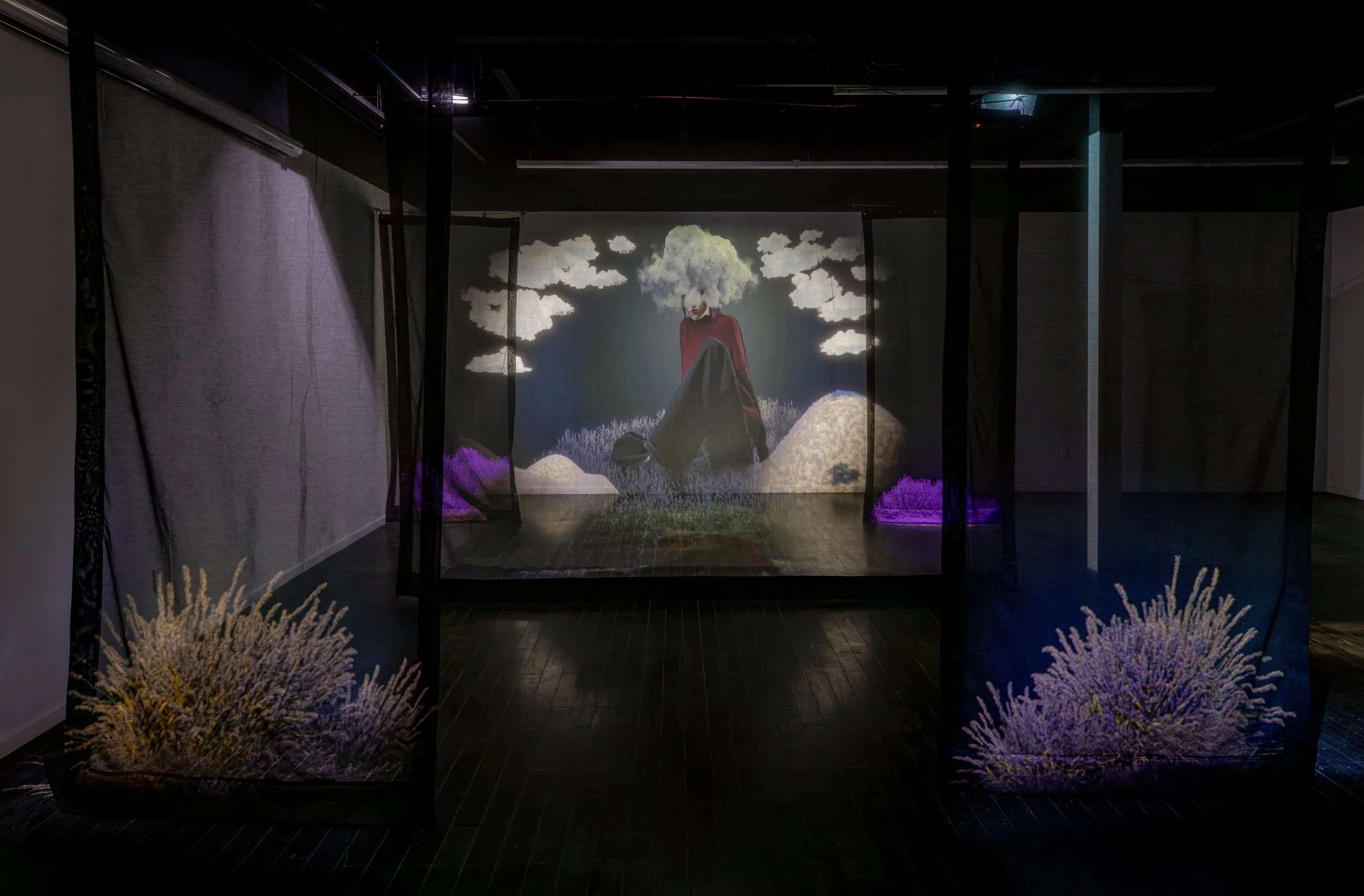
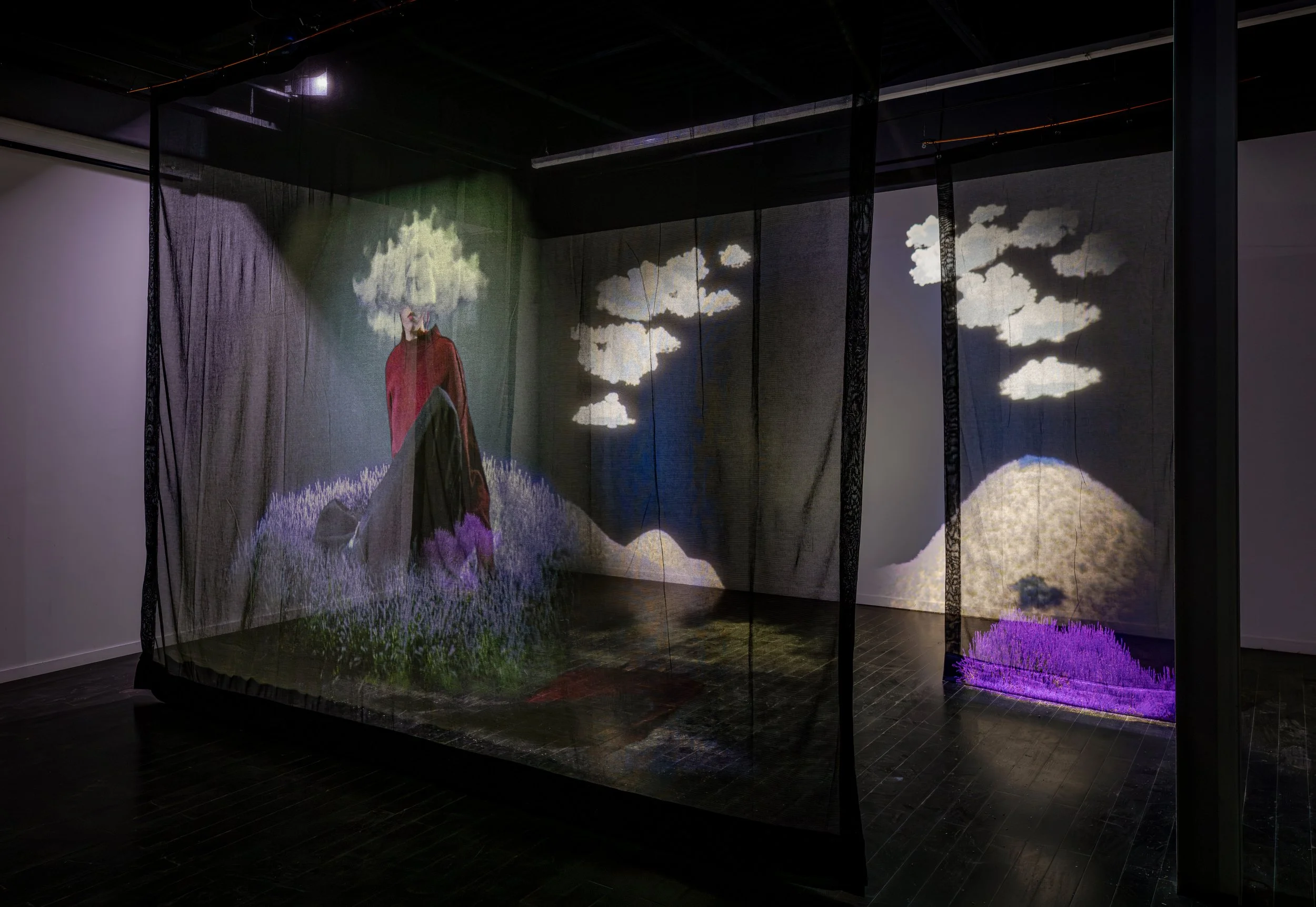
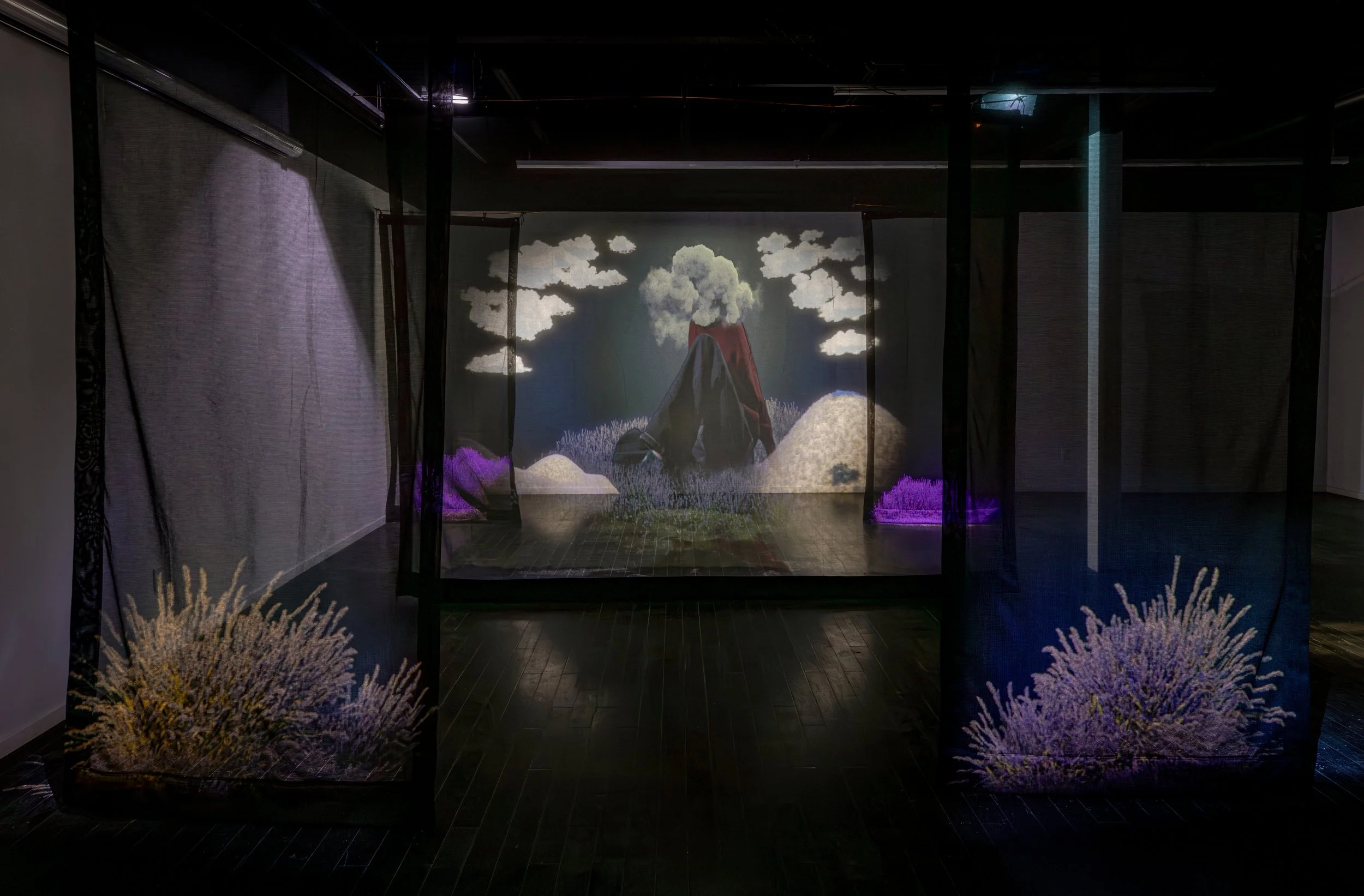
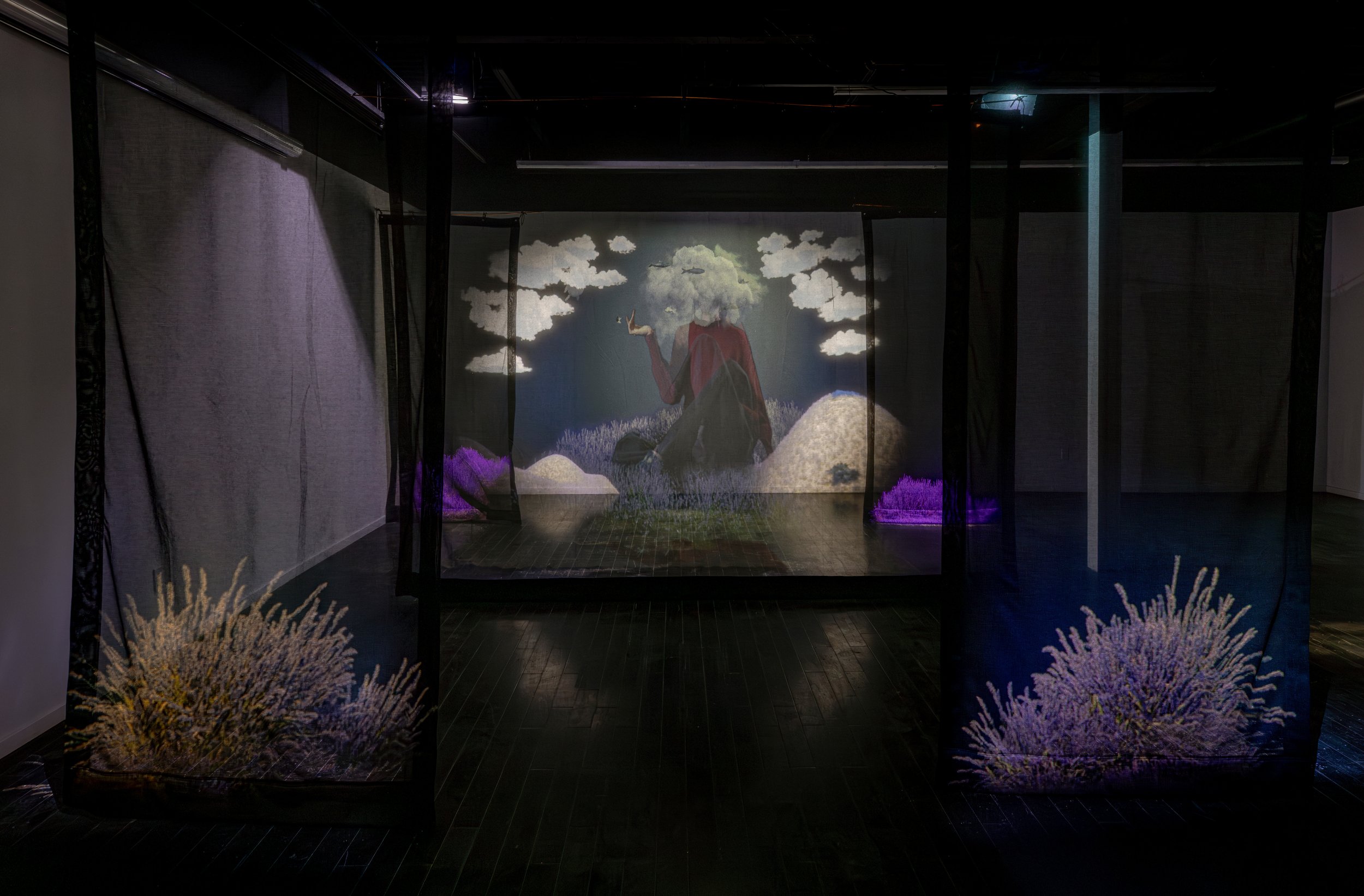
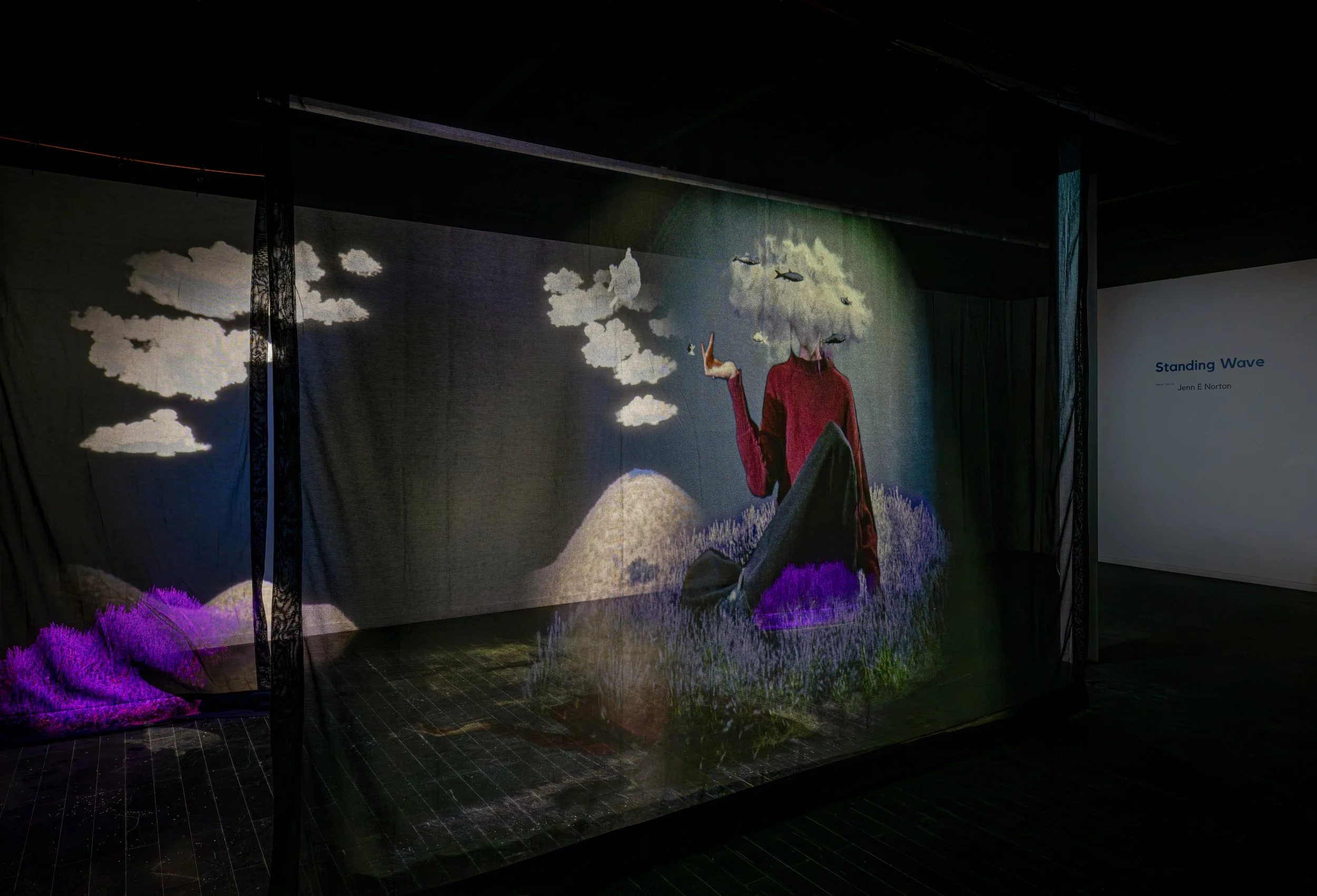
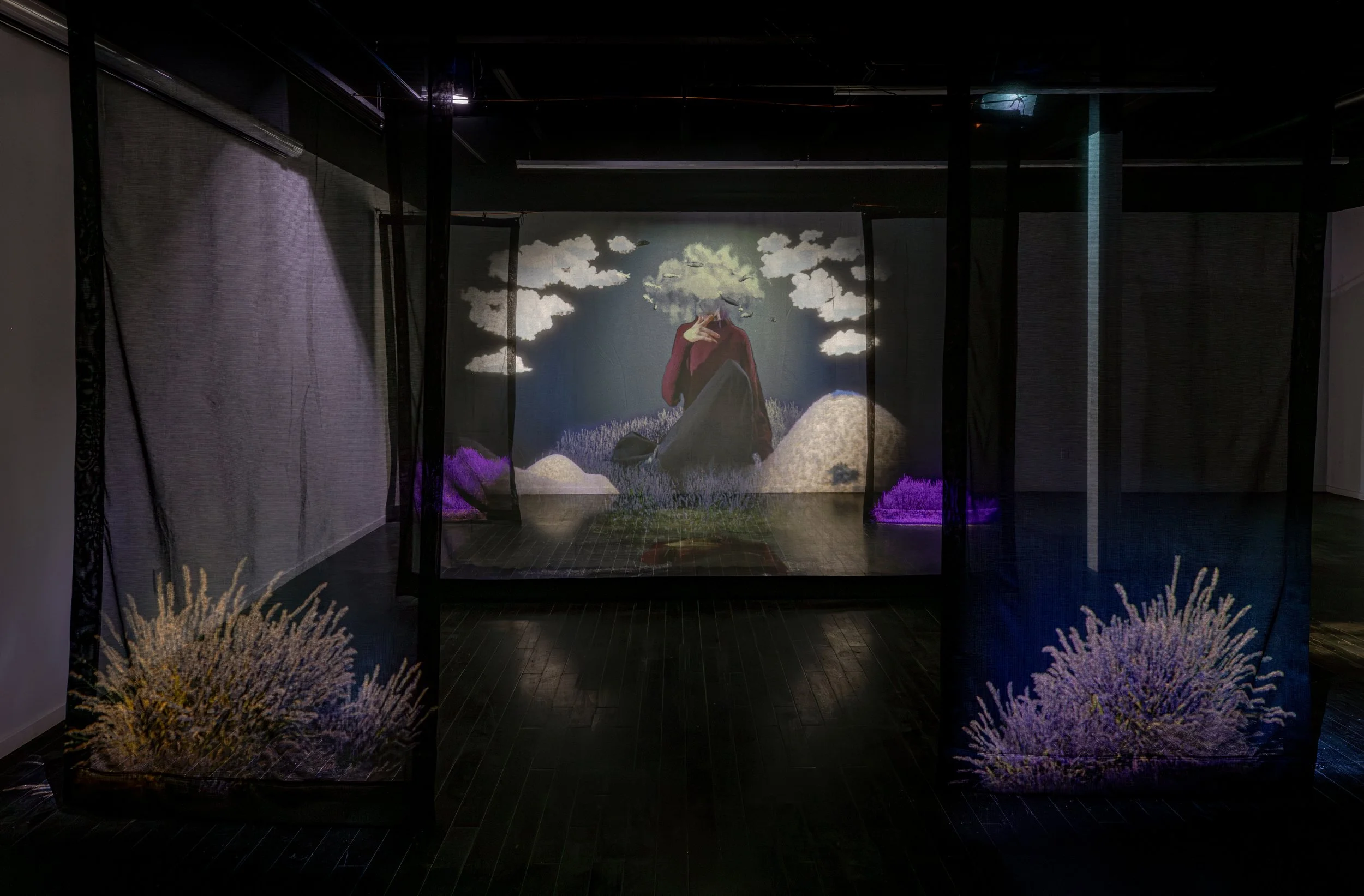
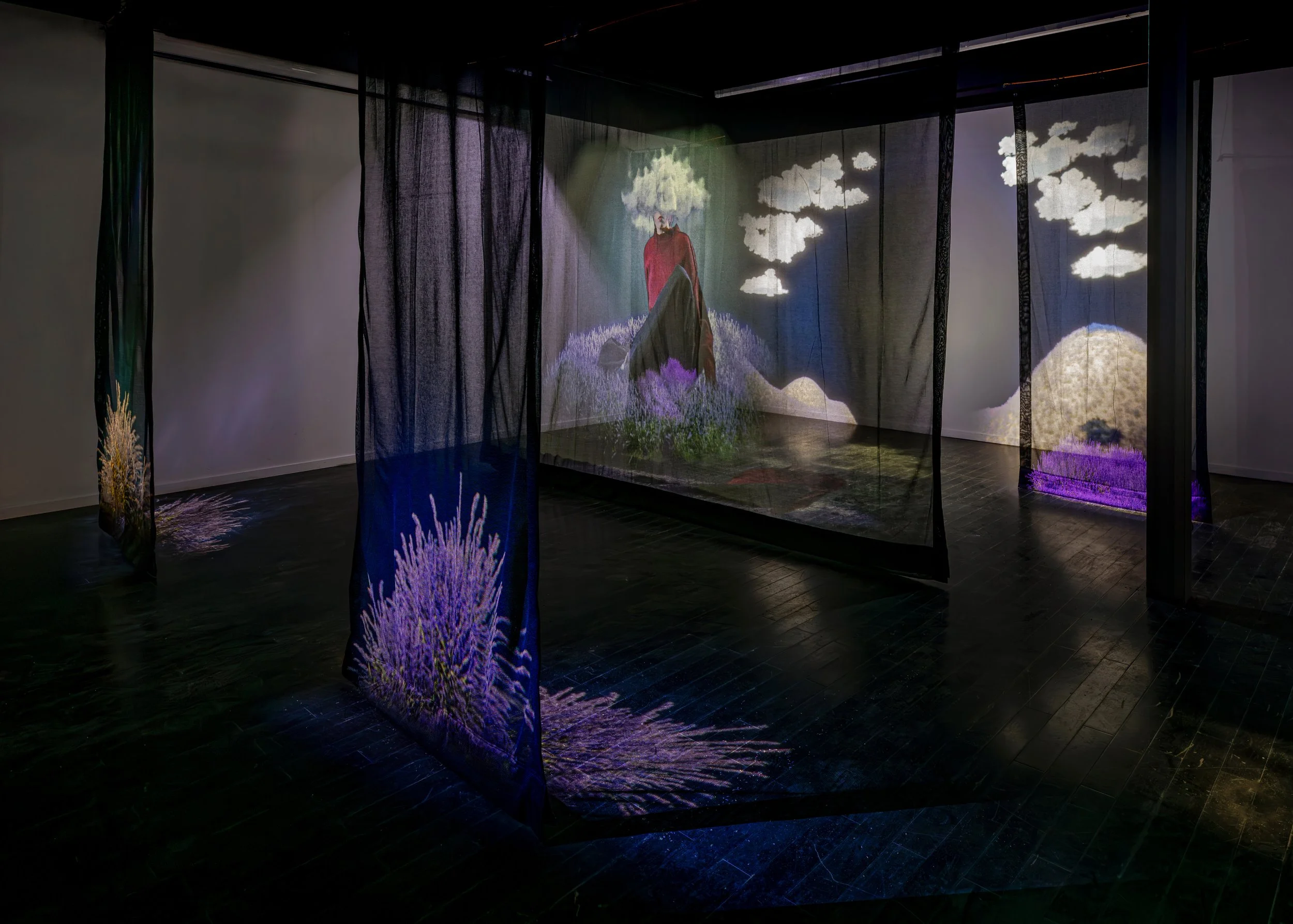
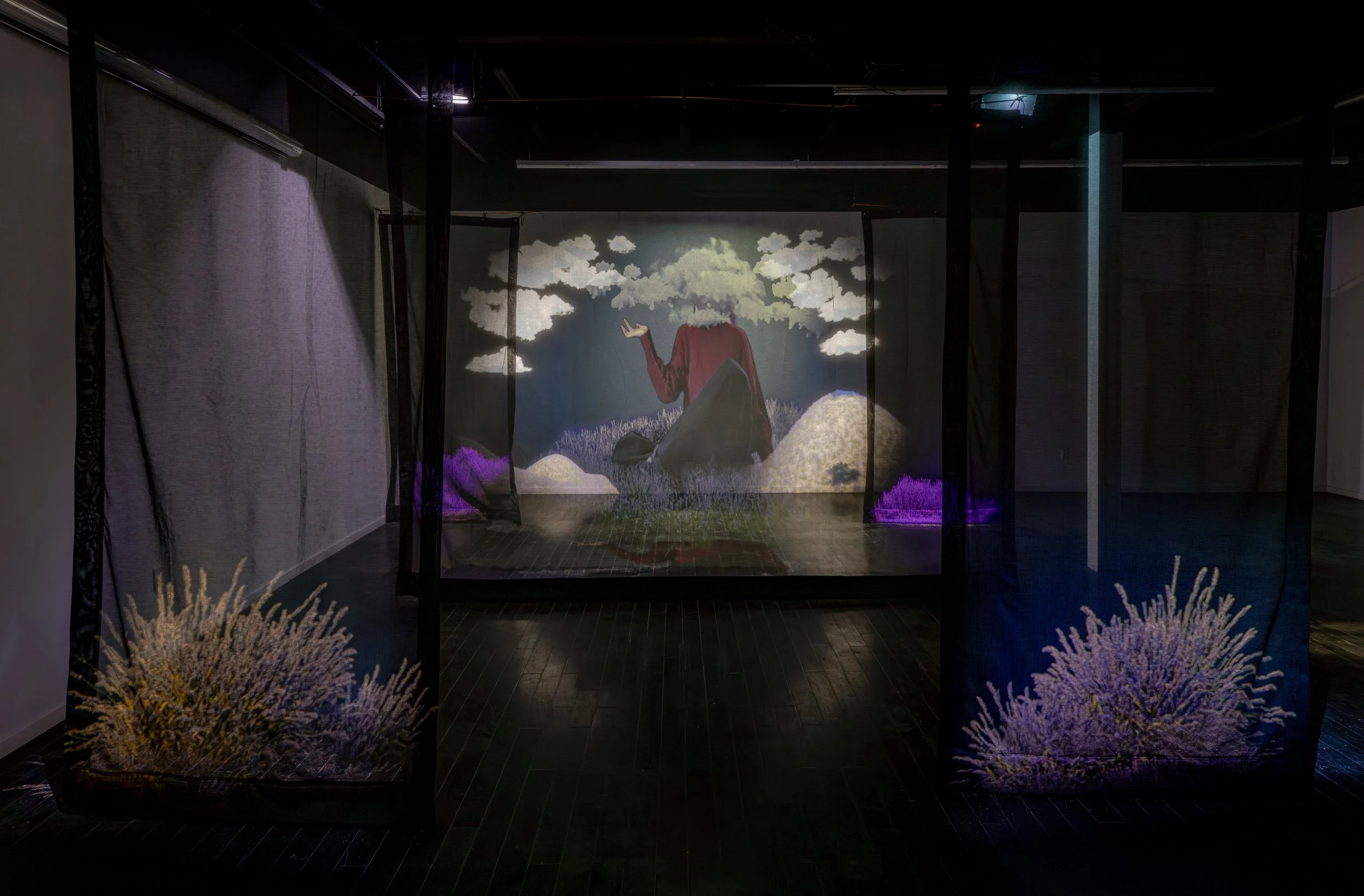
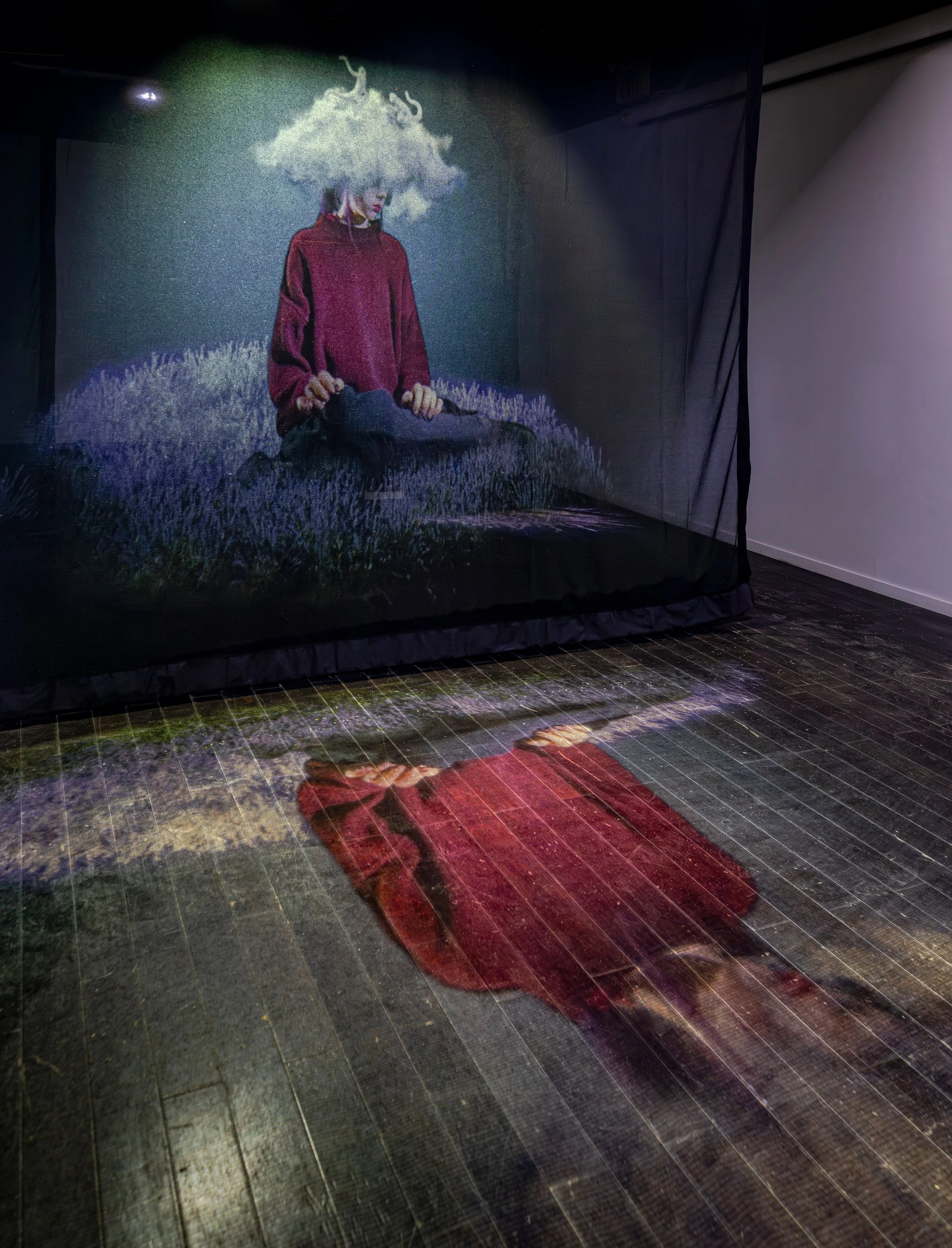
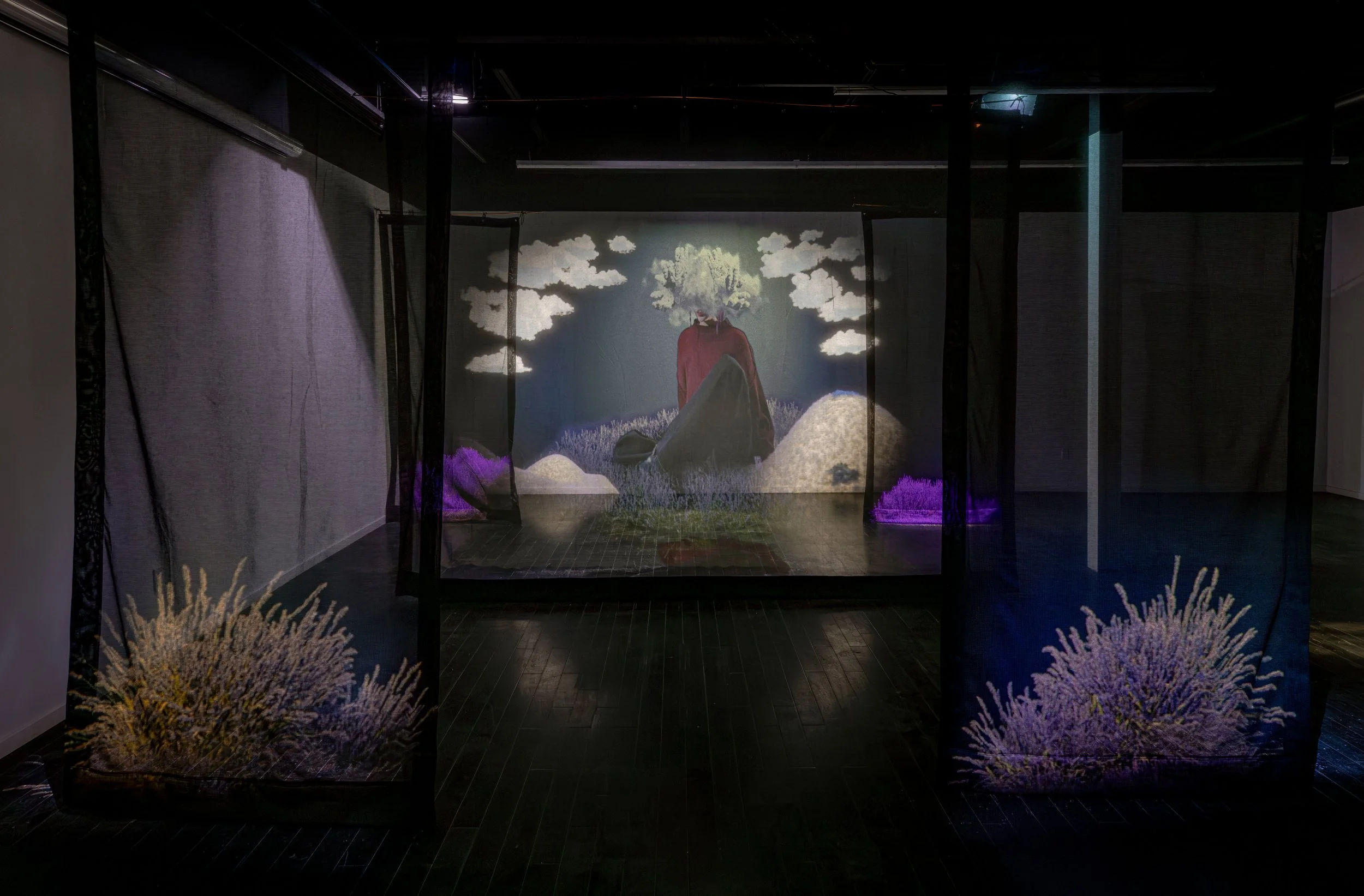
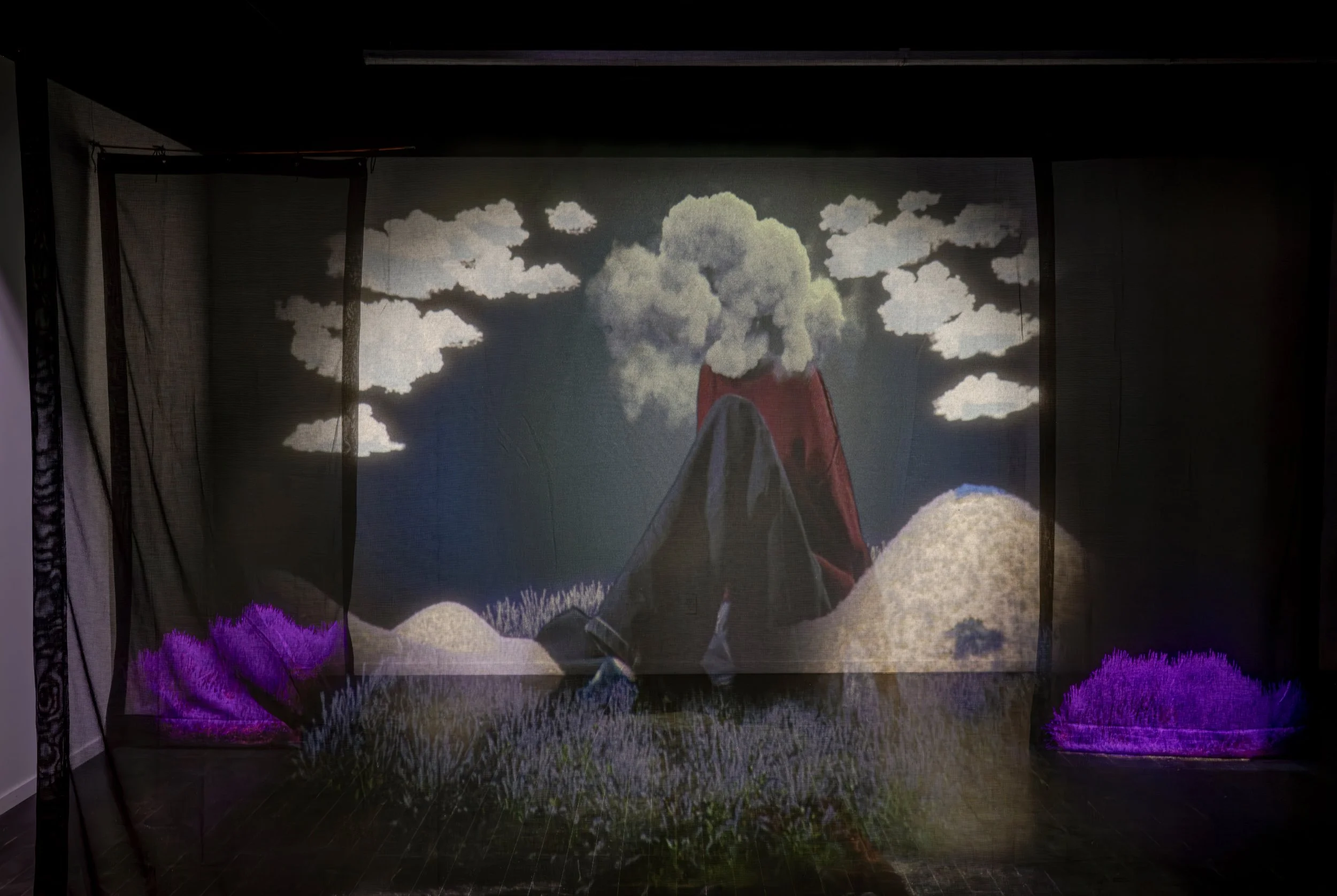
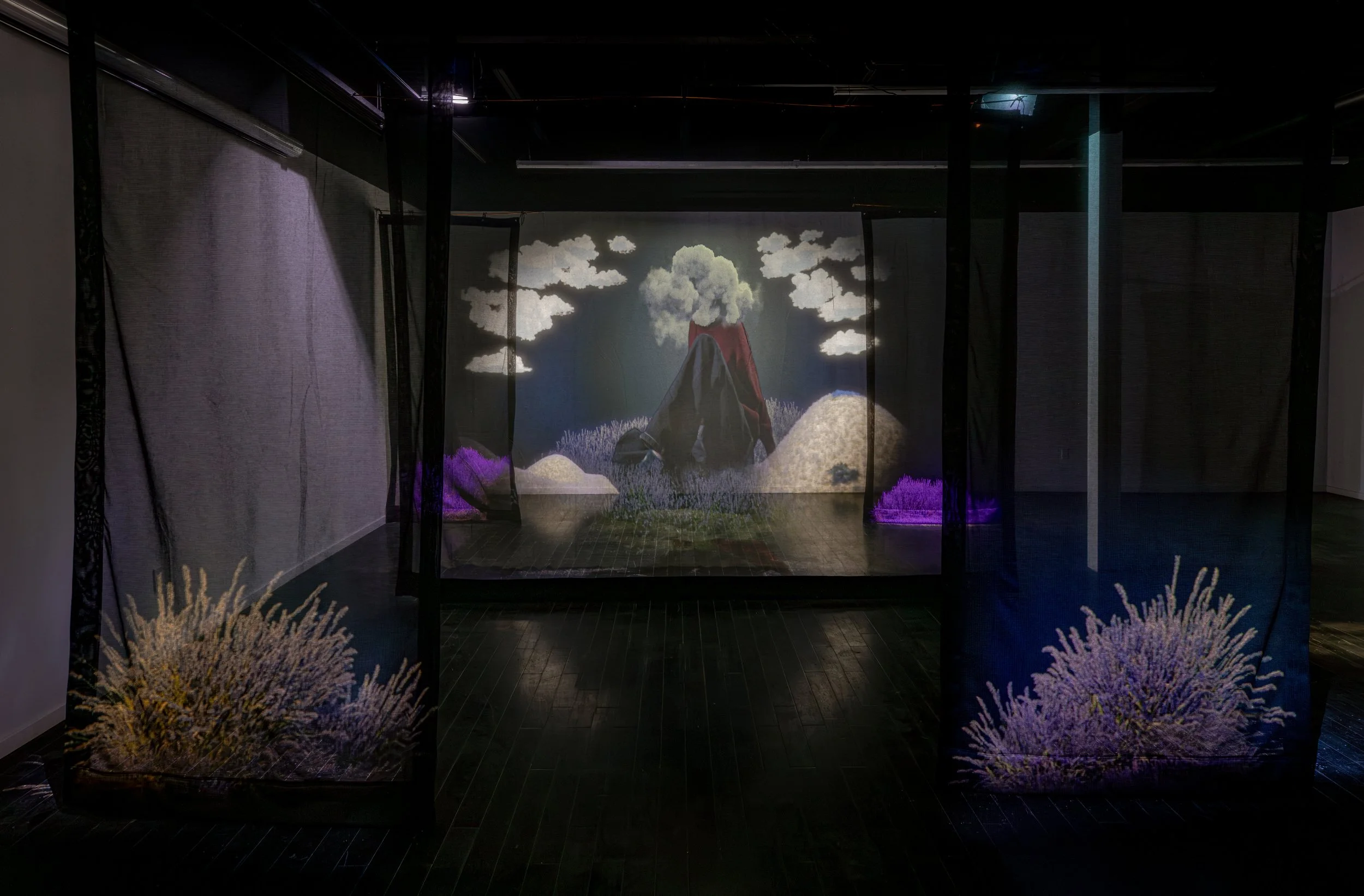
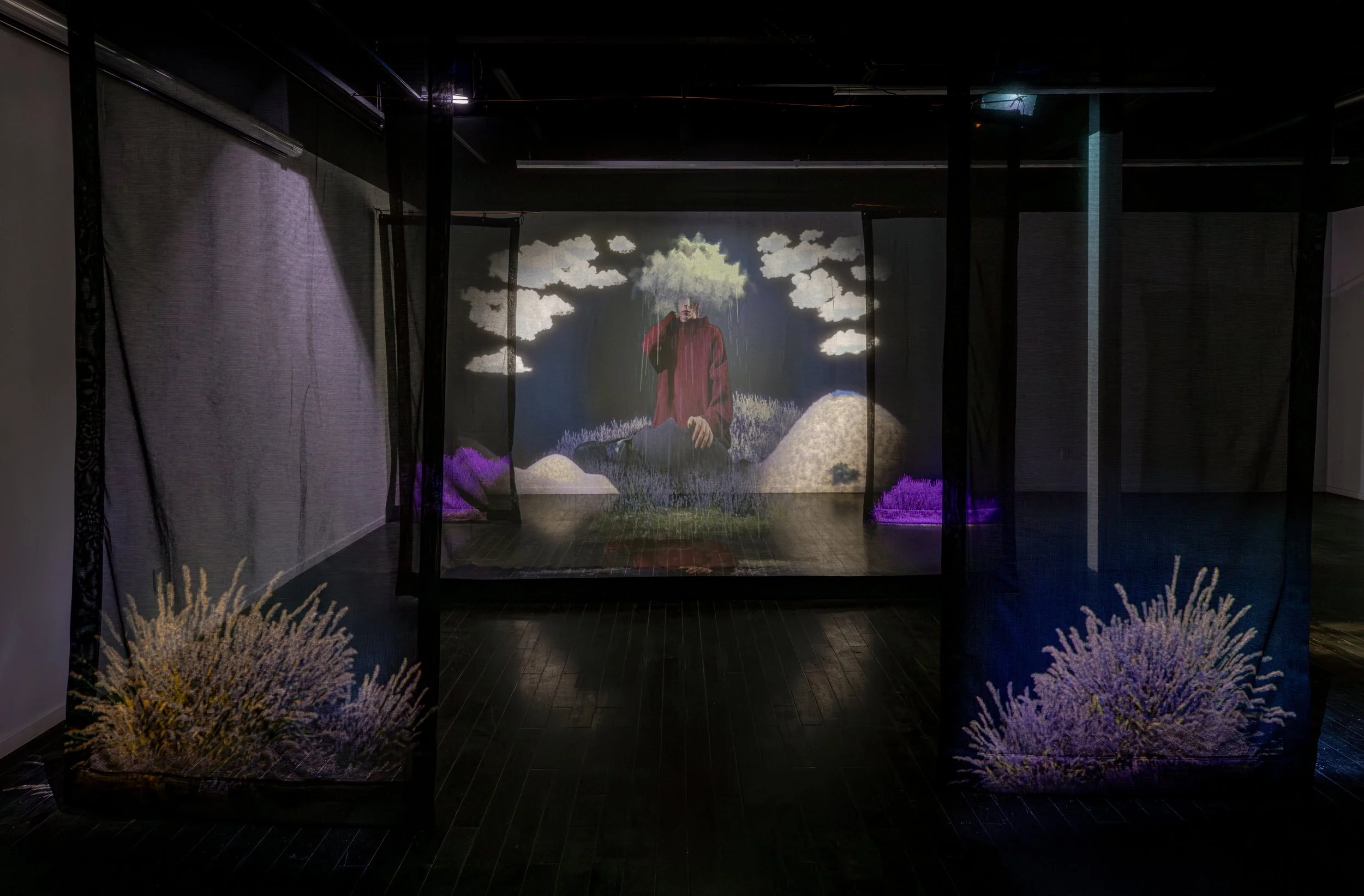
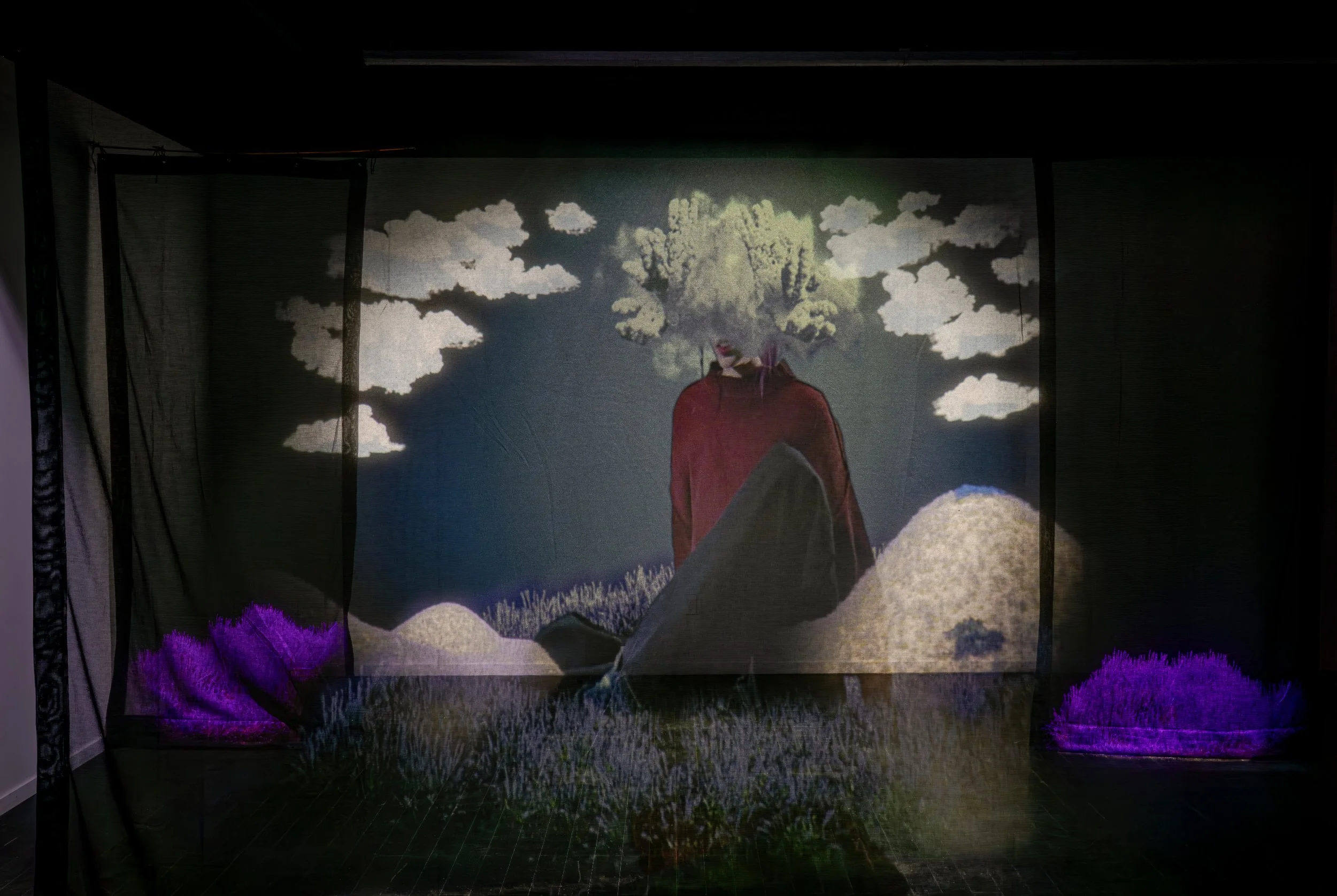
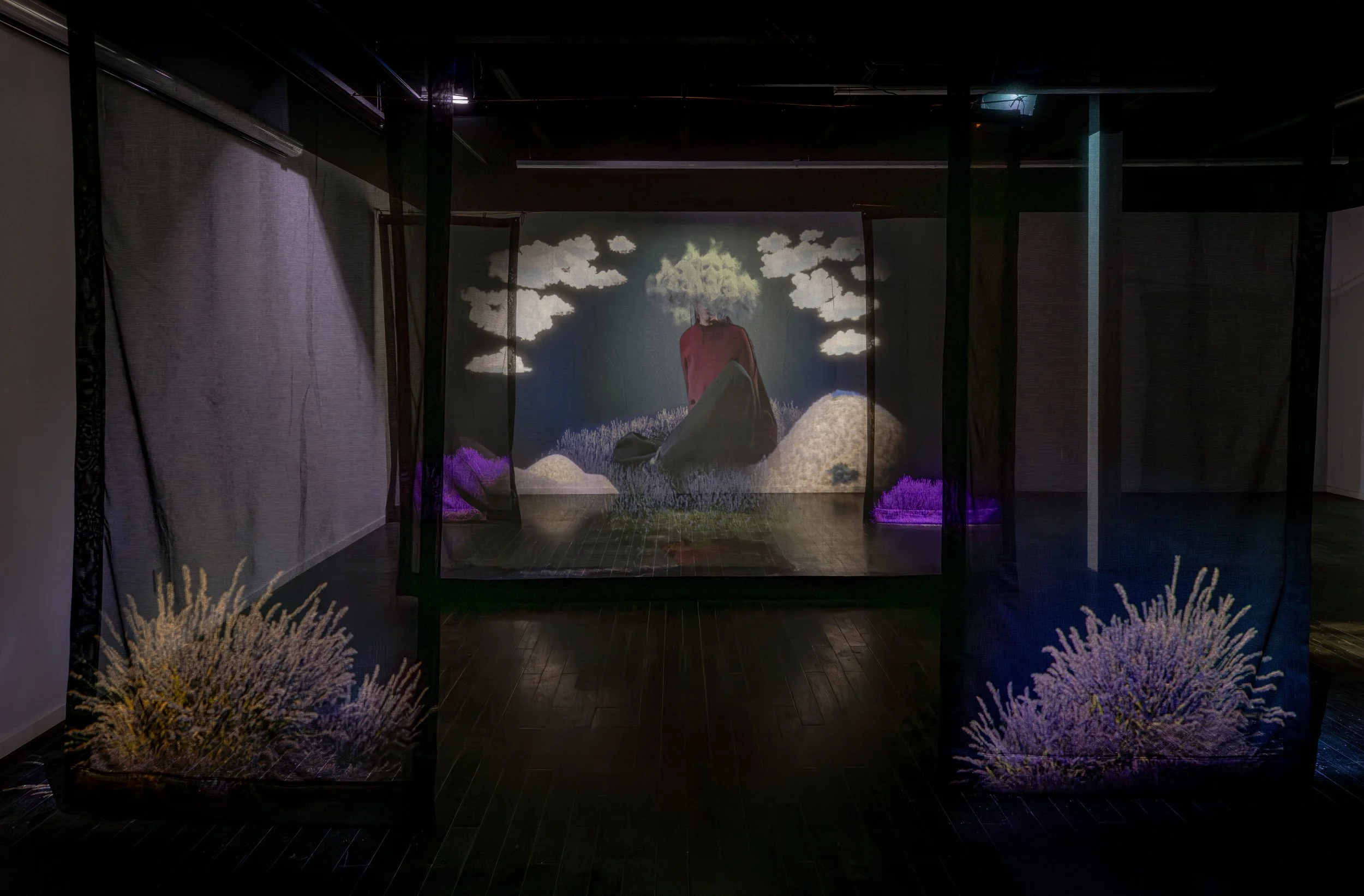
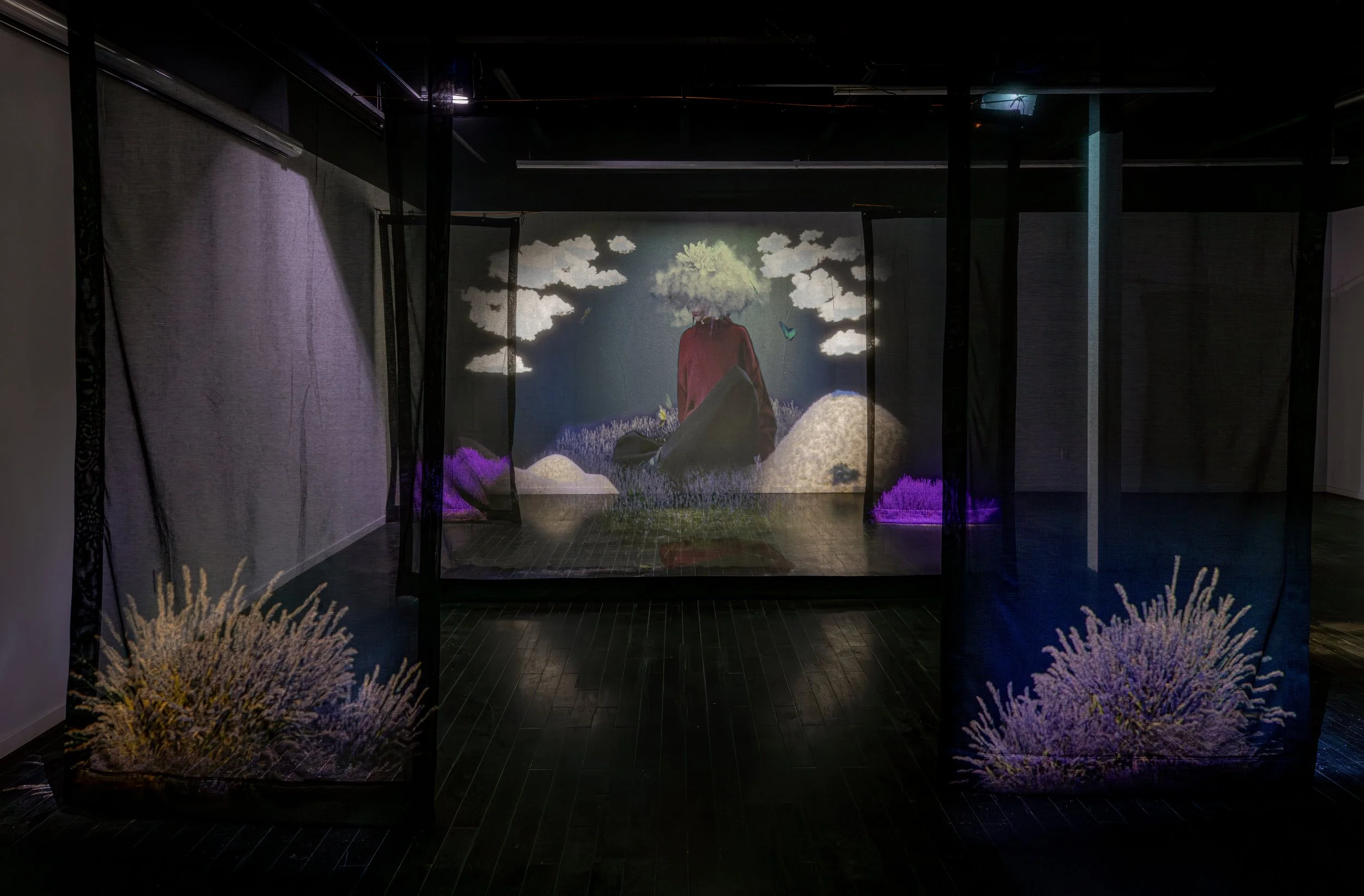
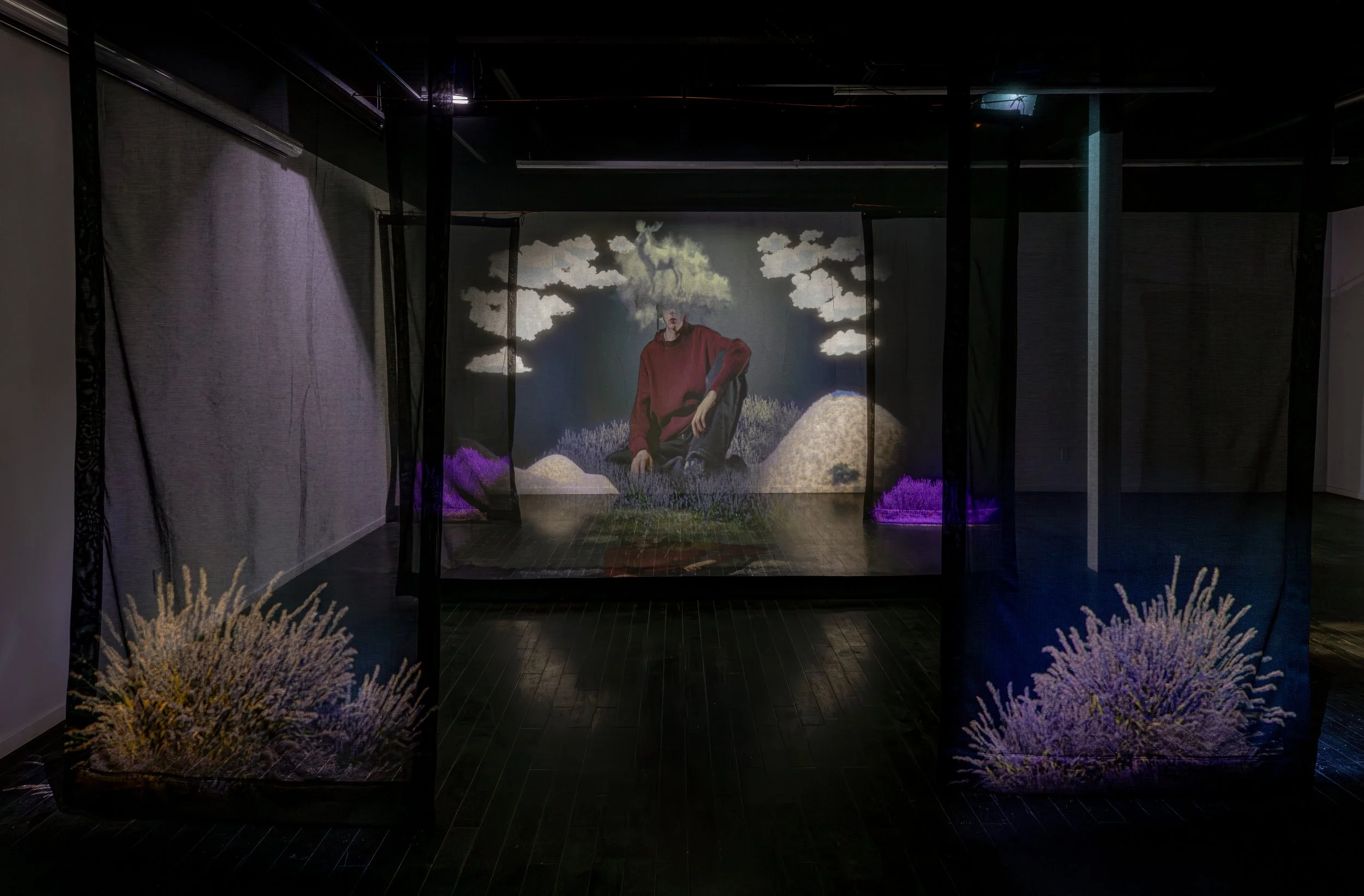
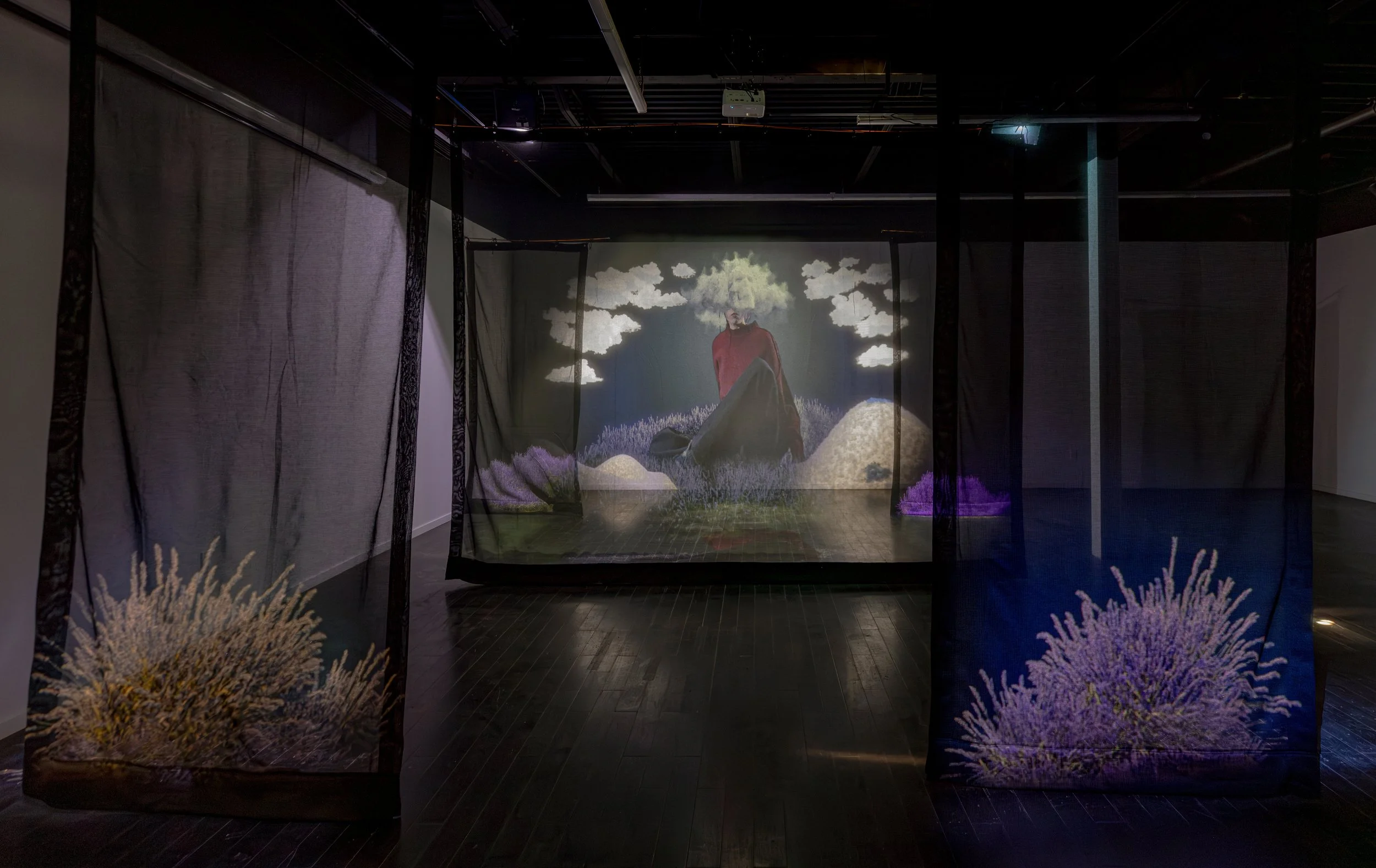
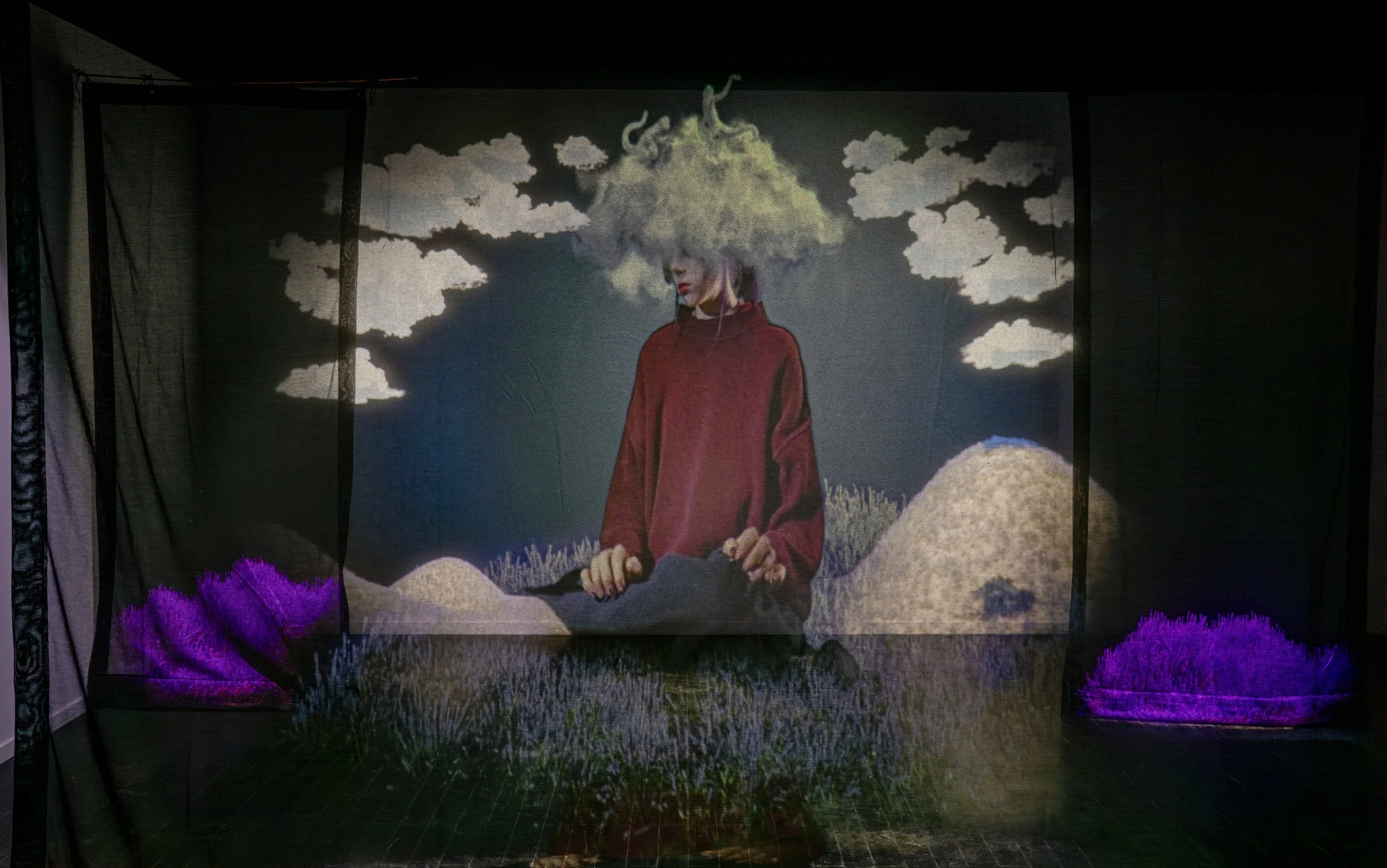
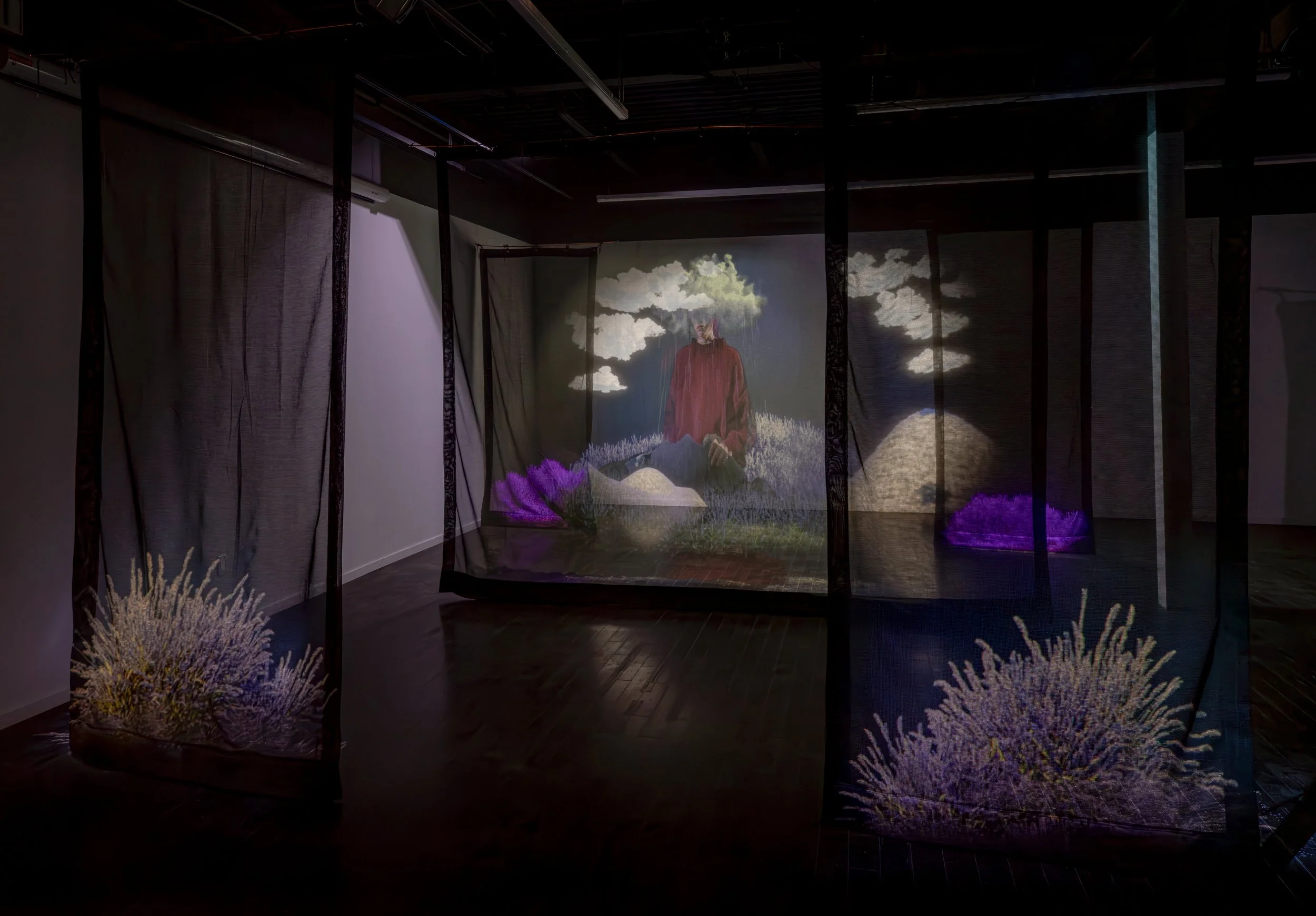
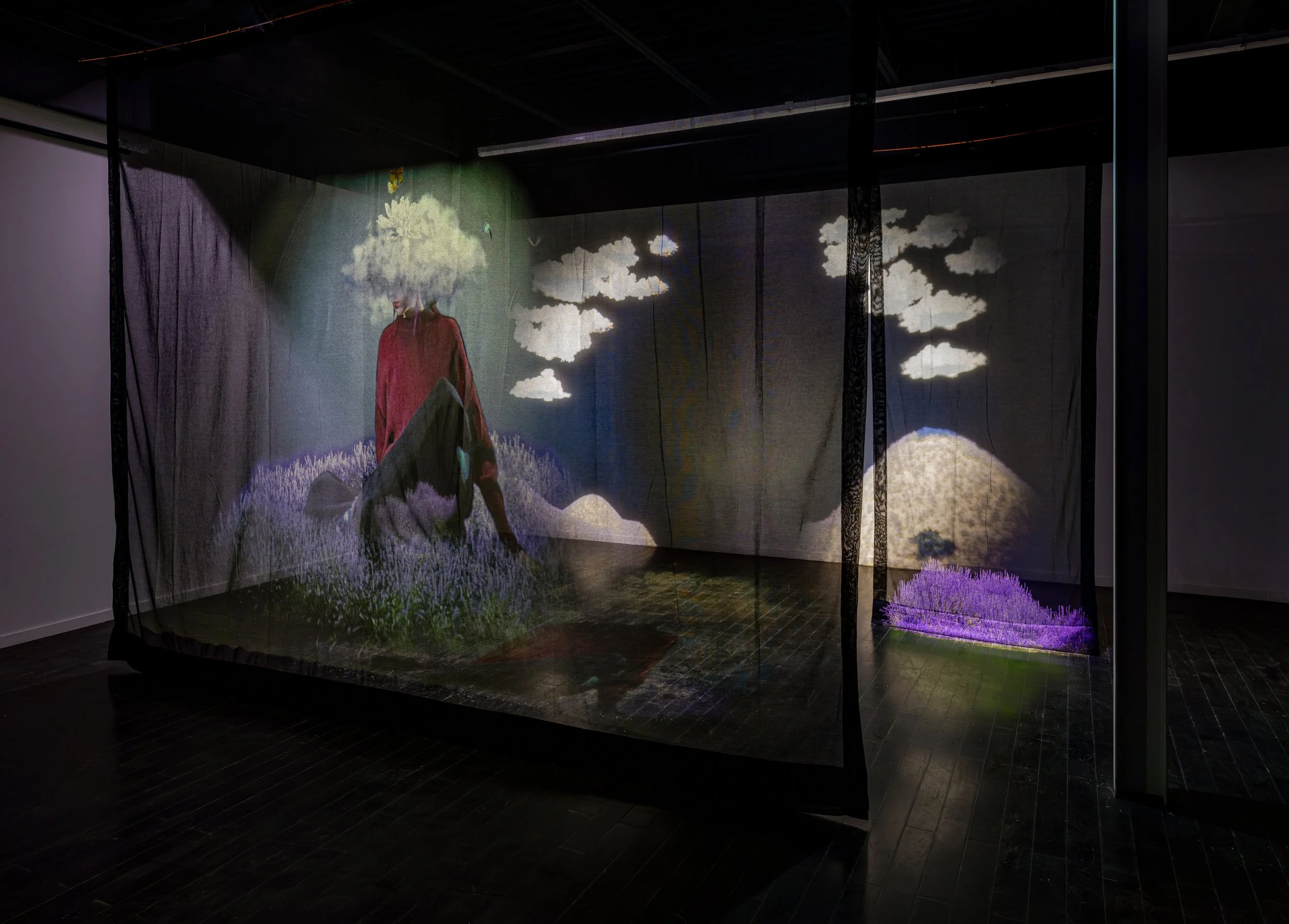
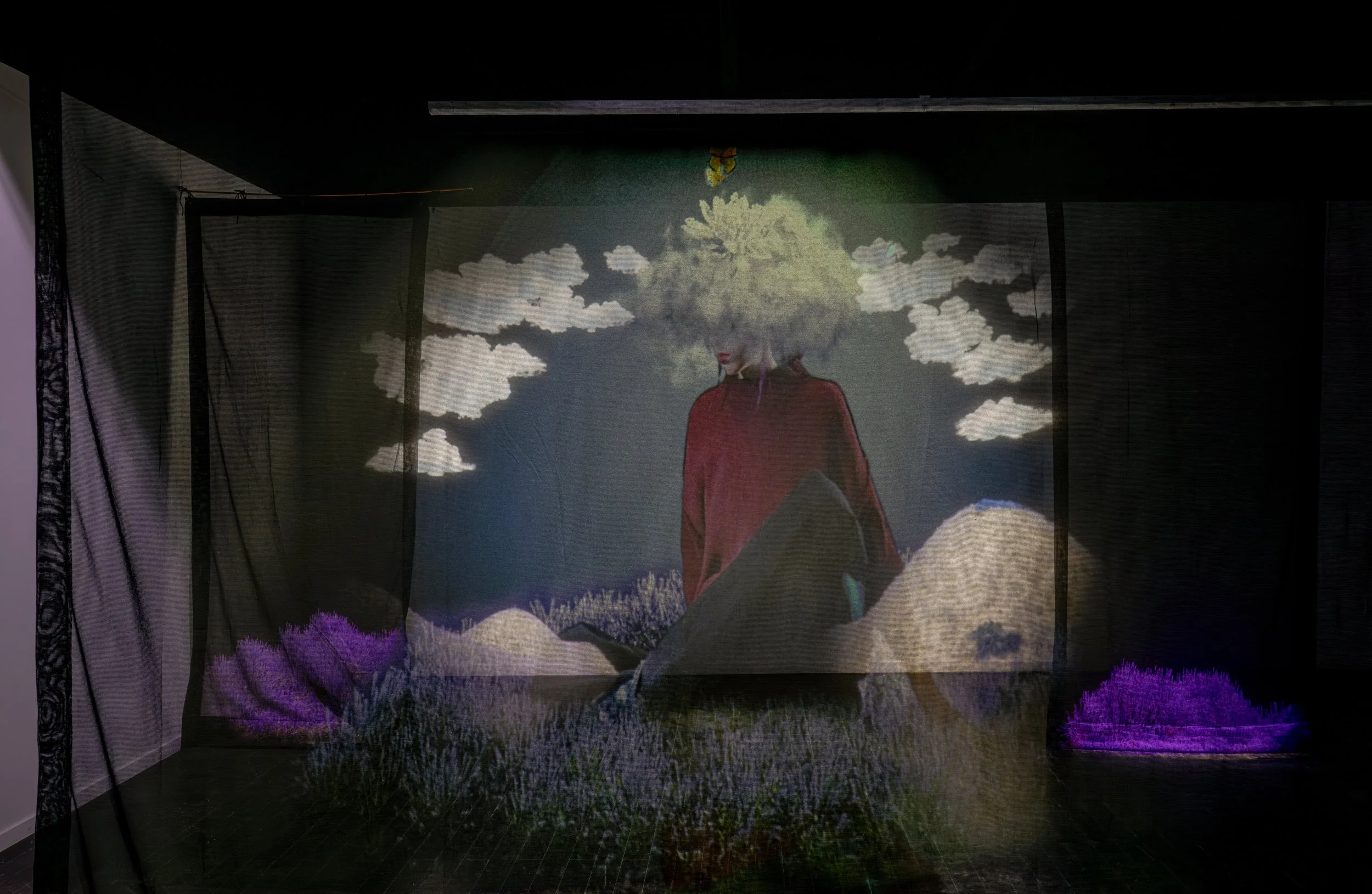
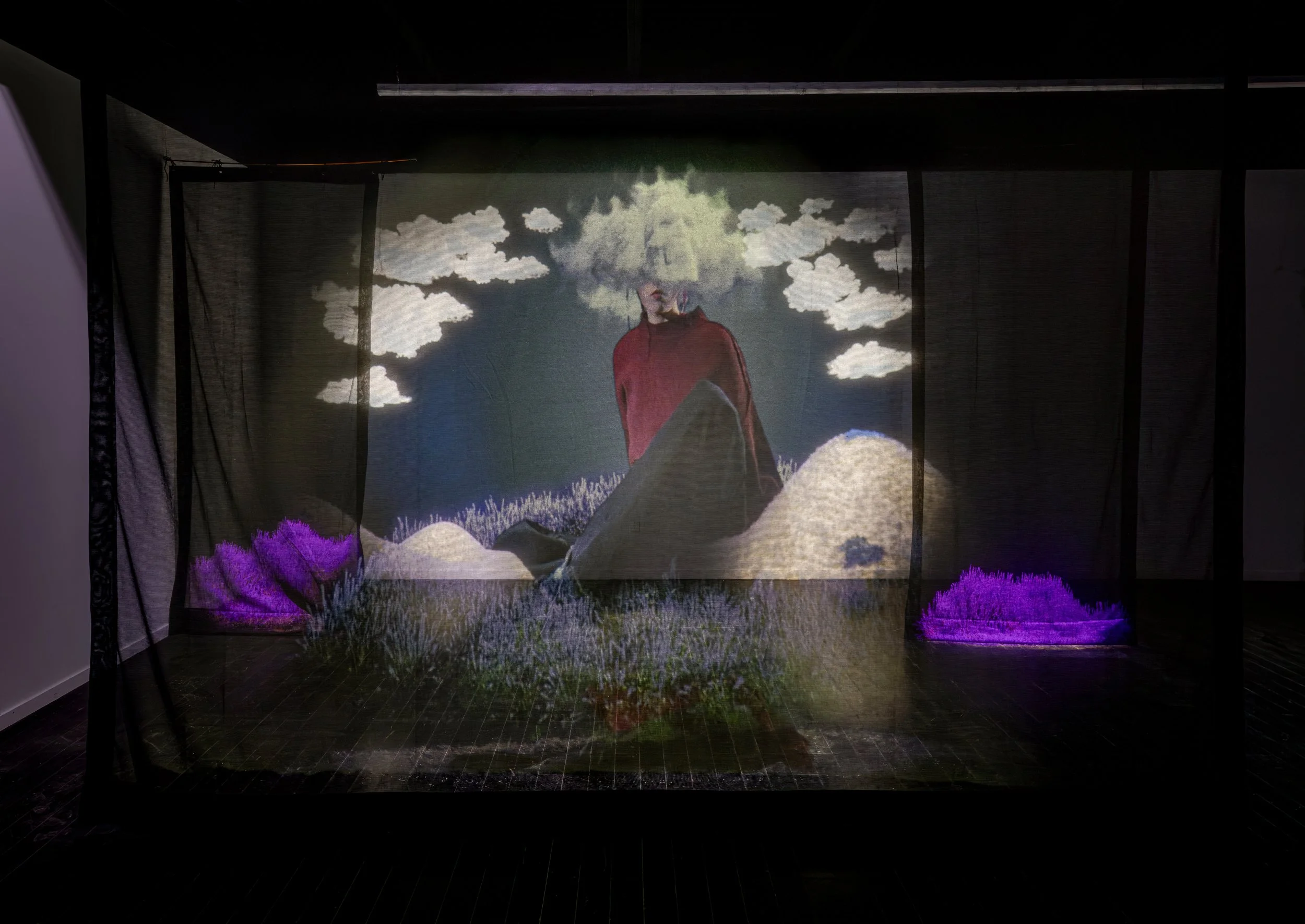
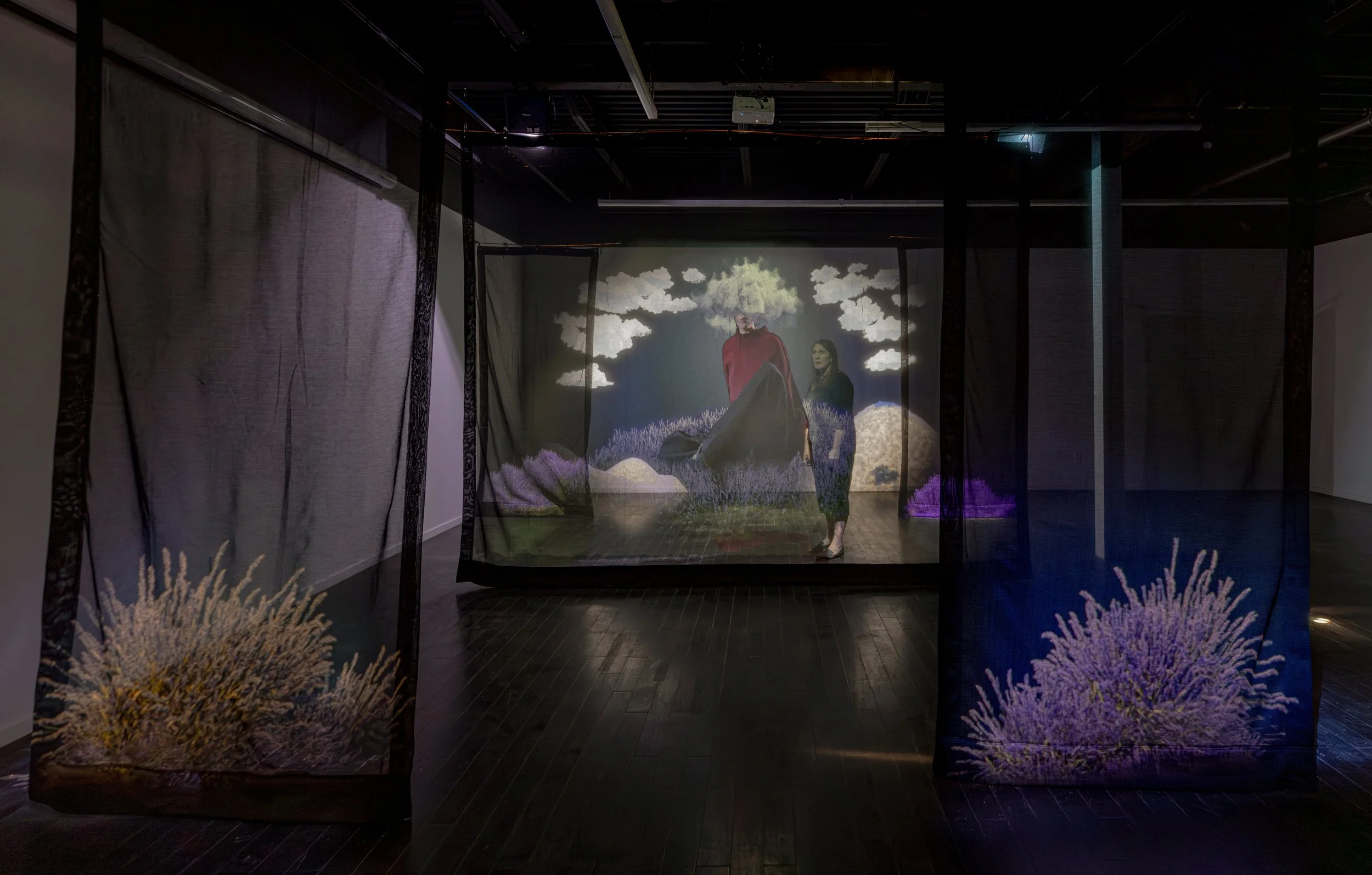
‘Standing Wave’ is a multichannel video installation that draws upon natural phenomena, such as cloud formations, paired with pareidolia and surrealist imagery to explore emotional and mental states of being. The title derives from the phenomenon of clouds forming above mountains, known as standing wave clouds or lenticular clouds, which indicate that rain is imminent.
Observers often mistake these clouds for UFOs because of their smooth, saucer-like shapes. A standing wave is a vibrational pattern that occurs when two waves oscillate at the same frequency and amplitude but move in opposite directions, interfering with one another. At certain points, the amplitude is zero; at others, it reaches its maximum. I employ this occurrence as a metaphor in a long-form animation in which clouds transform and morph through representations of places, people, animals, and objects, as a rolling thought process of hypnagogic visions.
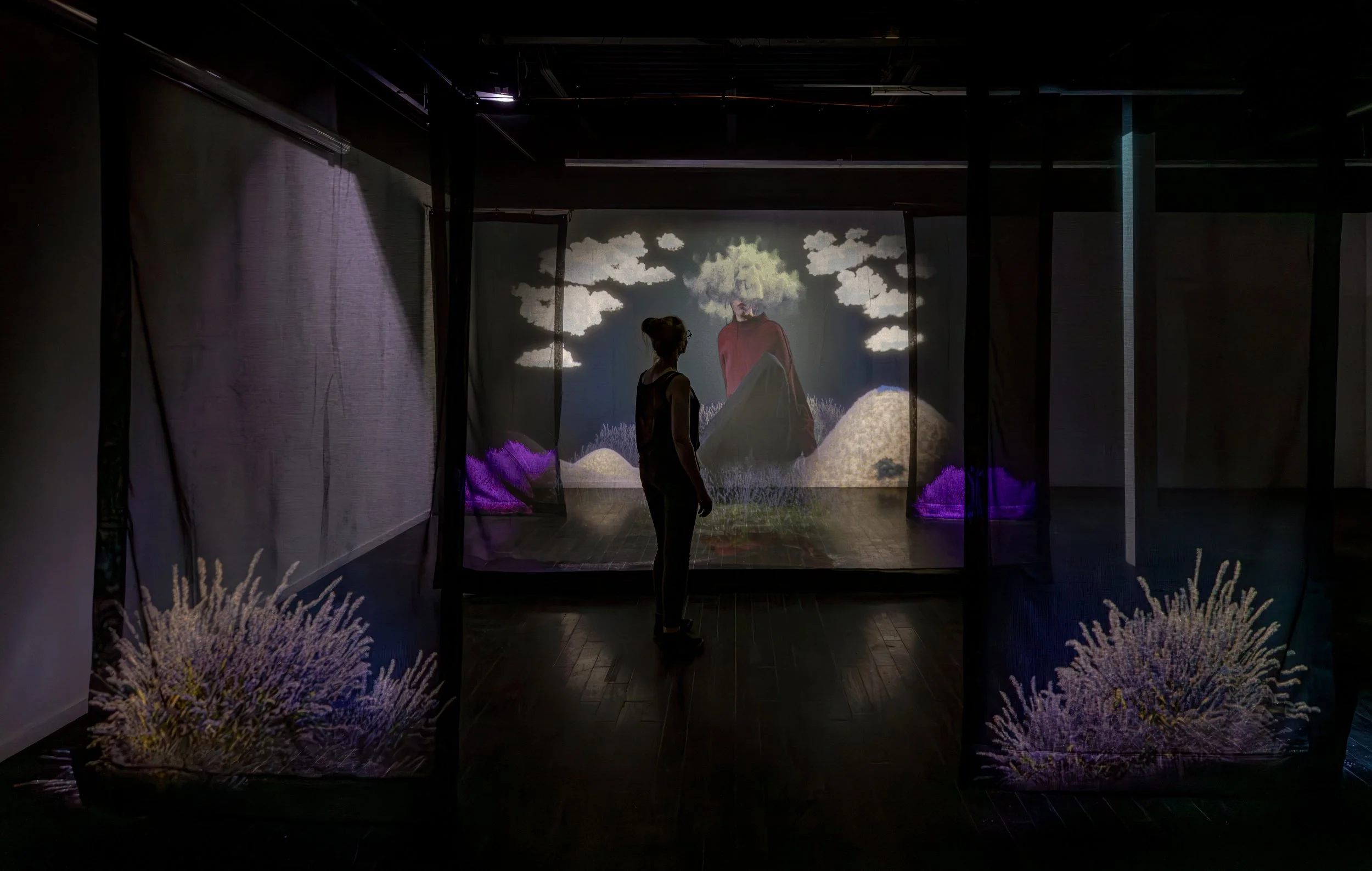
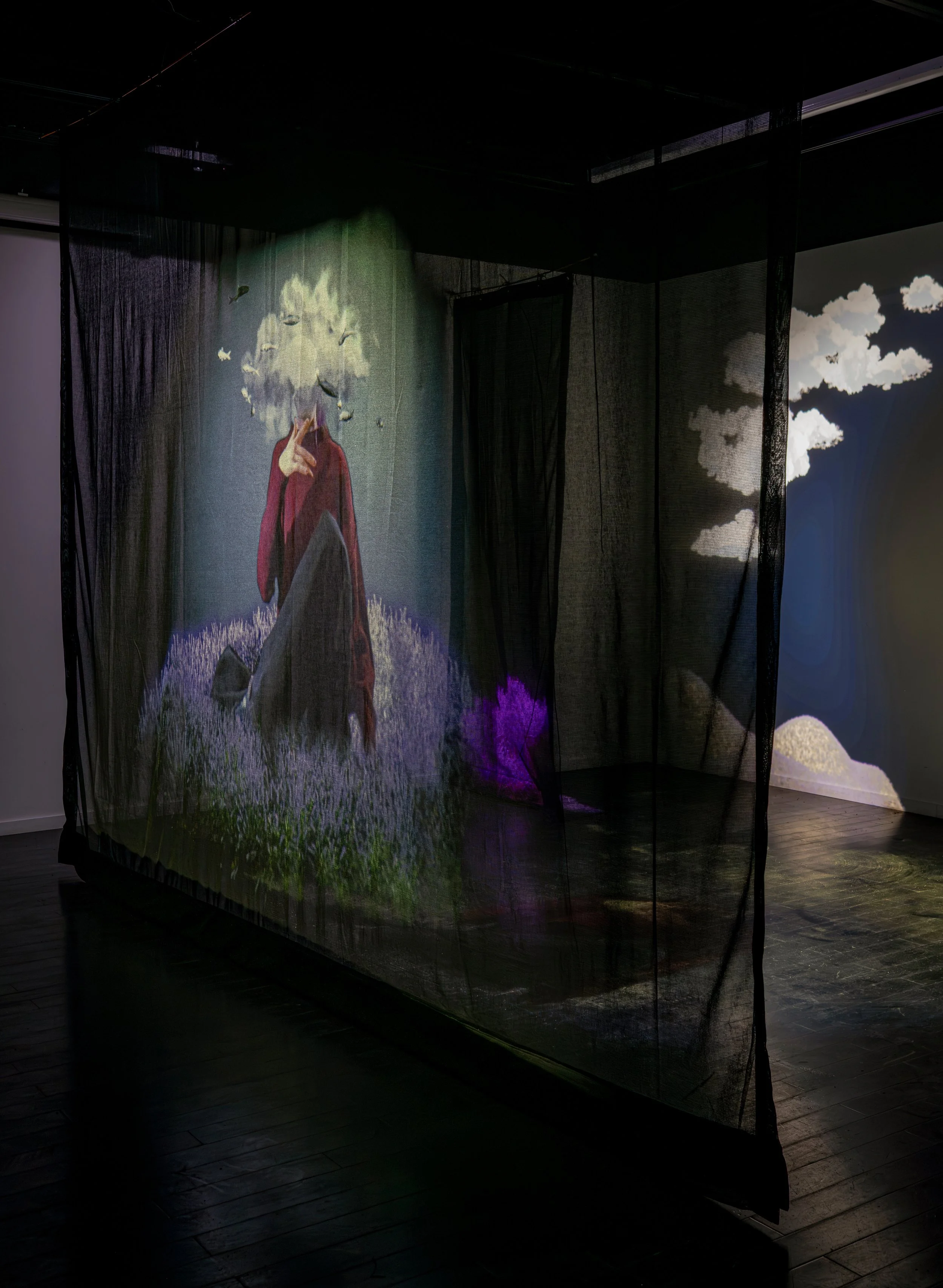
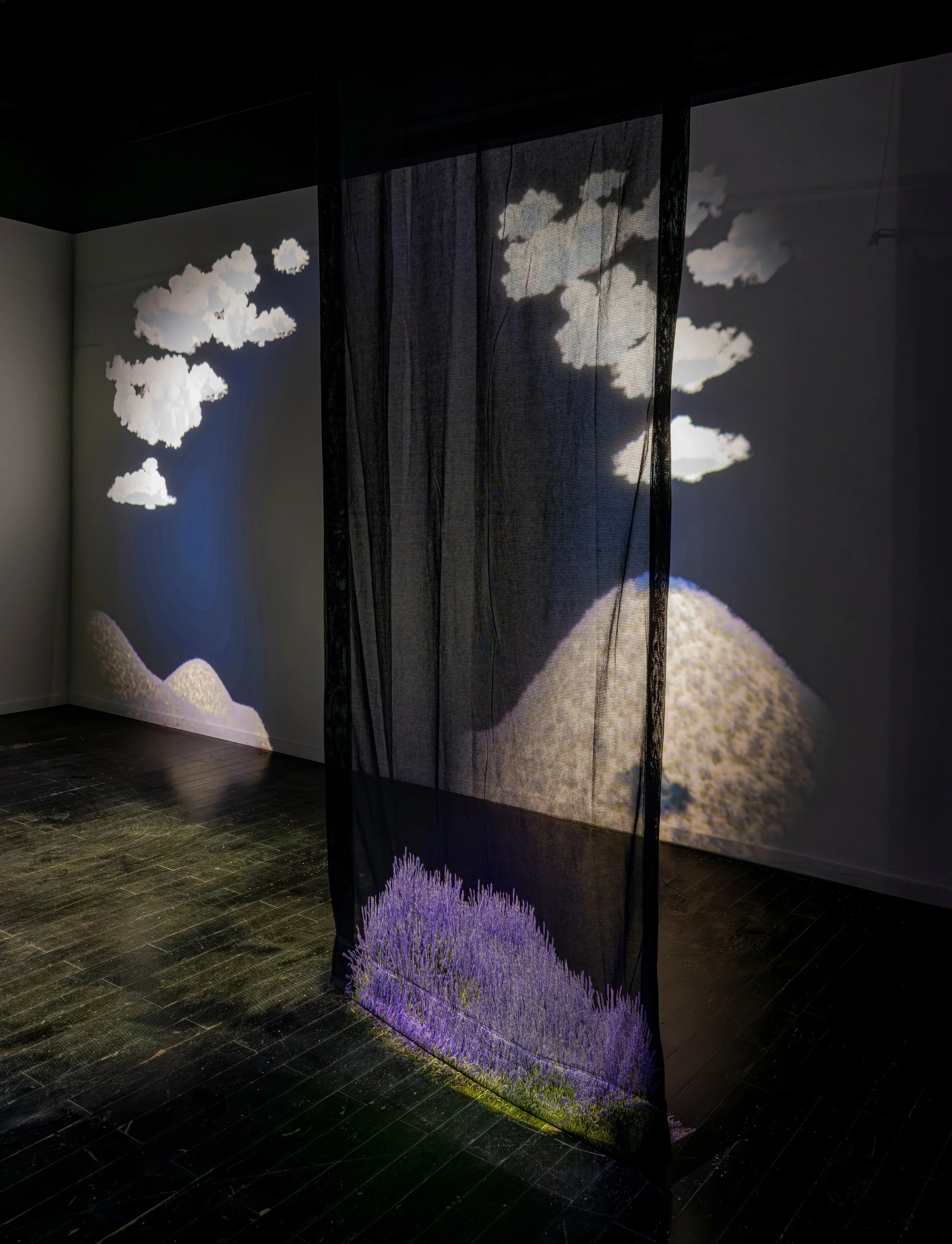
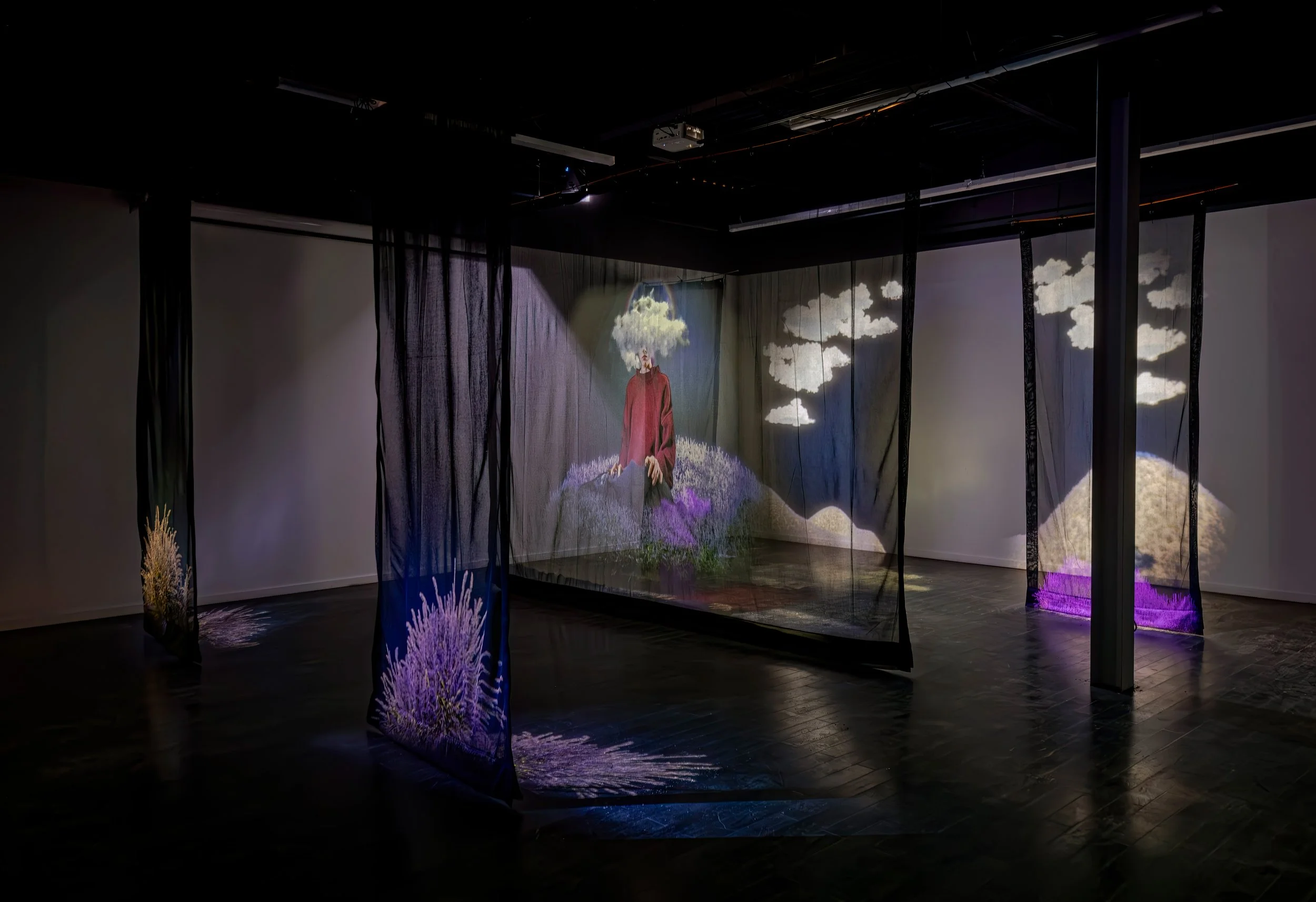
Multiple projections onto a strata of theatrical scrims are used to form a multiplane, multidimensional video installation that spans the gallery space. The imagery is produced with from live-action footage composited with 3D animation, created in Blender, a 3D modelling and animation software package. A theatrical scrim is a specialized, open-weave fabric curtain used to create lighting effects, illusions, and scene reveals, often producing magical effects. When lit from the front, it appears opaque; when a projection or light illuminates behind the scrim, it becomes transparent. It produces ethereal, dreamy, silhouetted, or "bleed through" effects.
Upon entering the gallery, the viewer encounters a projection of a towering woman seated on the floor, whose head nearly reaches the gallery ceiling. Beneath her is a knoll covered in lavender that gently blows in the wind. Her head is mostly obscured by clouds. These clouds take on the appearance of people, places, animals, and objects, similarly to the phenomenon known as pareidolia, which many have experienced while looking at clouds. These formations, however, are not in the likeness of the puffy clouds daydreamers fancifully gaze upon, but are roiling, as elephants stomp along as storming apparitions that then transform into clasping hands that materialize and dematerialize from recognition. The woman moves in slow motion, fidgeting at times, tapping her foot, shifting position, and waving at the clouds, as though swatting intrusive thoughts away like flies.
Projected on the floor-to-ceiling scrims hung before and behind her is a projected landscape of rolling hills blanketed in lavender, gently moving with a simulated breeze that alludes to its calming effects, suggesting a salve to the ominous clouds above. There is a forced perspective applied to the installation: the lavender at the entrance of the gallery is to scale, whereas the lavender beneath the woman appears smaller, emphasizing her immensity. The scale of the lavender behind her suggests a distance that goes on towards the horizon.
Time is experienced differently in ‘Standing Wave’; the woman's movements are slow and dreamlike, as are the clouds that endlessly transform and morph, yet the sun rises and sets within minutes. The installation is modelled in part on the multiplane camera invented by German animator Lotte Reiniger (later developed and popularized by Disney).
The multiplane camera is a motion-picture camera used in traditional animation processes that moves multiple pieces of imagery on sheets of glass past the camera at different speeds and at varying distances from one another. This produces a parallax effect, creating a sense of depth. In ‘Standing Wave’, the theatrical scrims serve as the sheets of glass, and the viewer stands in place of the camera; their movement throughout the gallery space creates a parallax effect.