Cambium, 2026
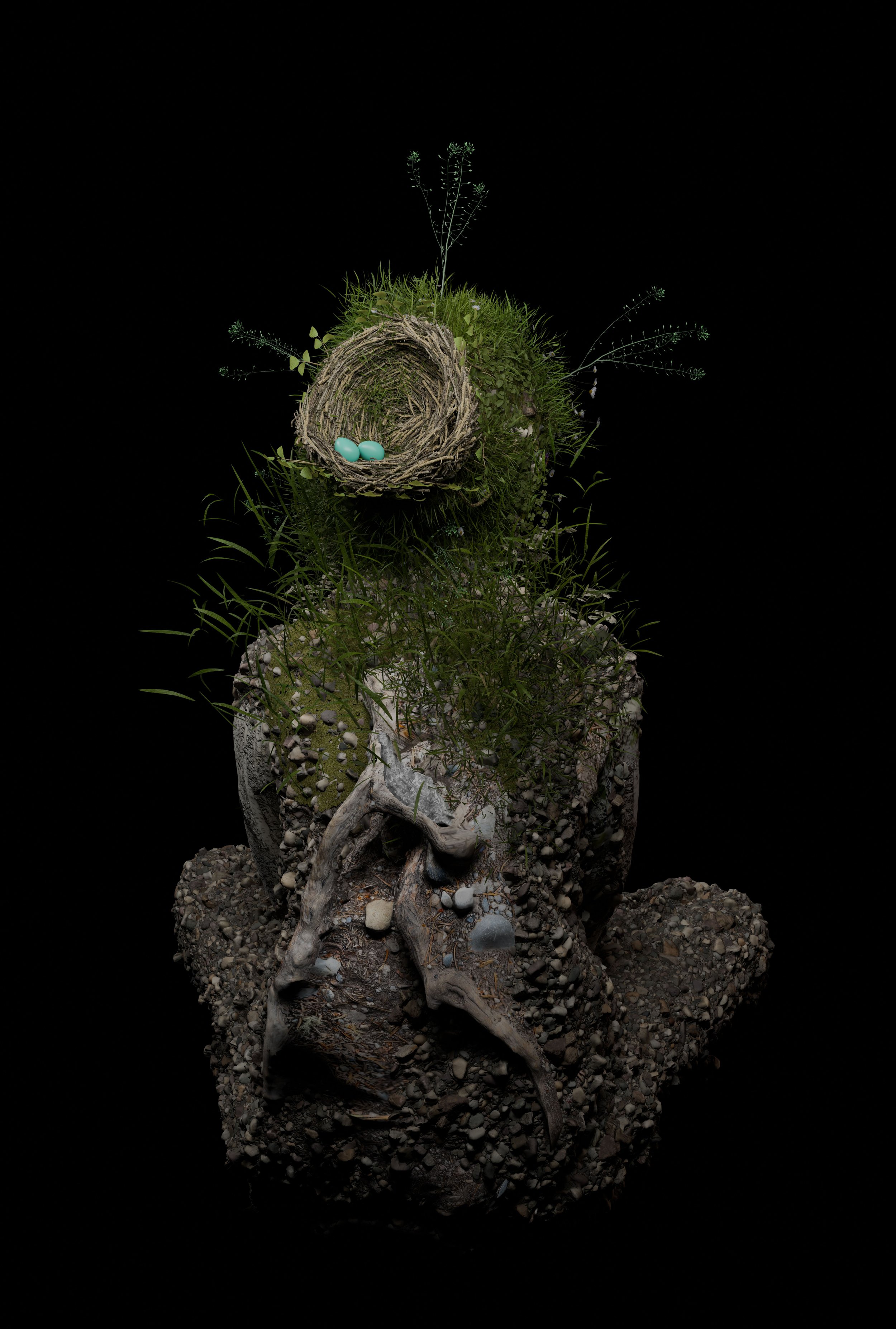
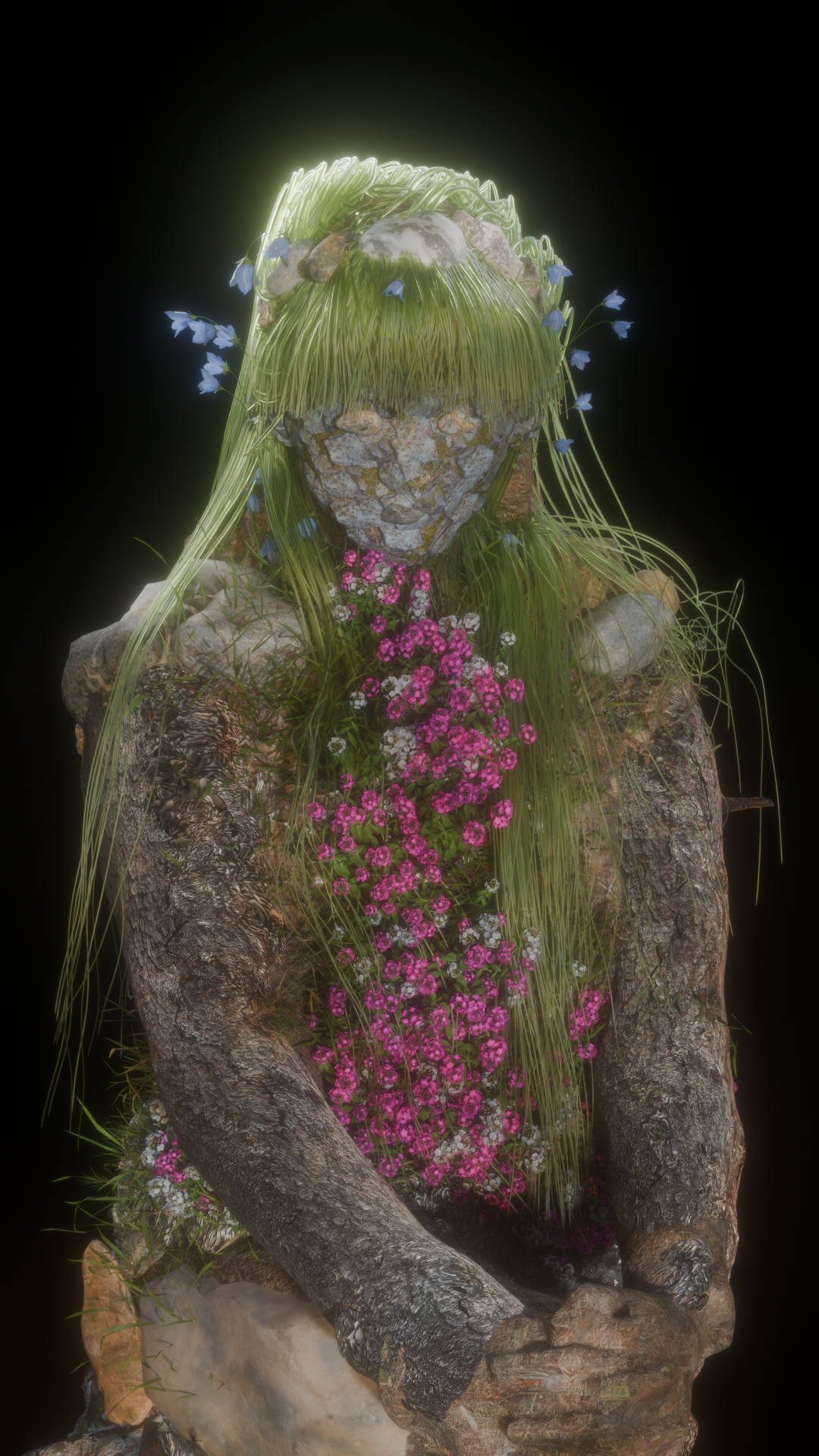
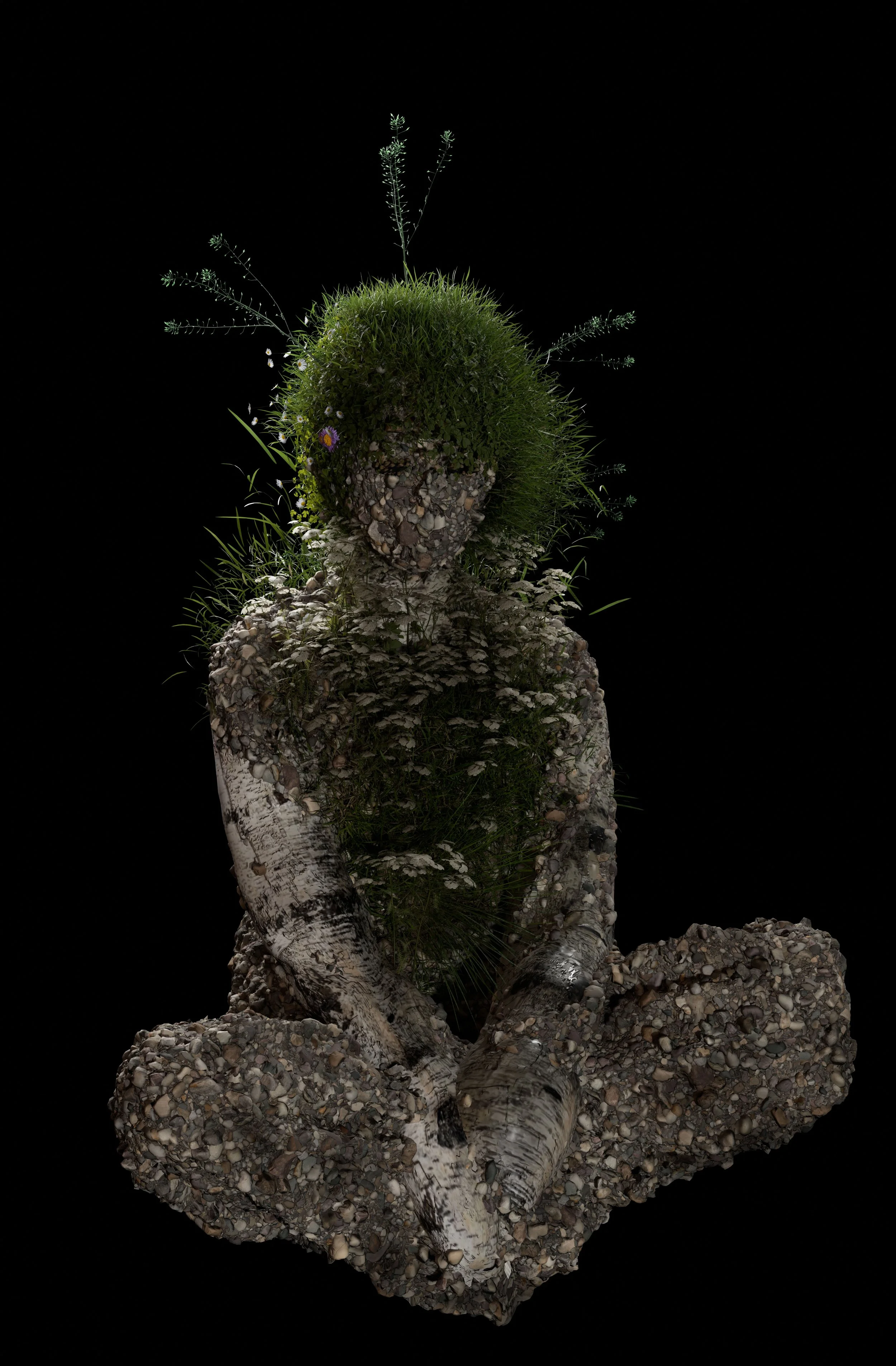
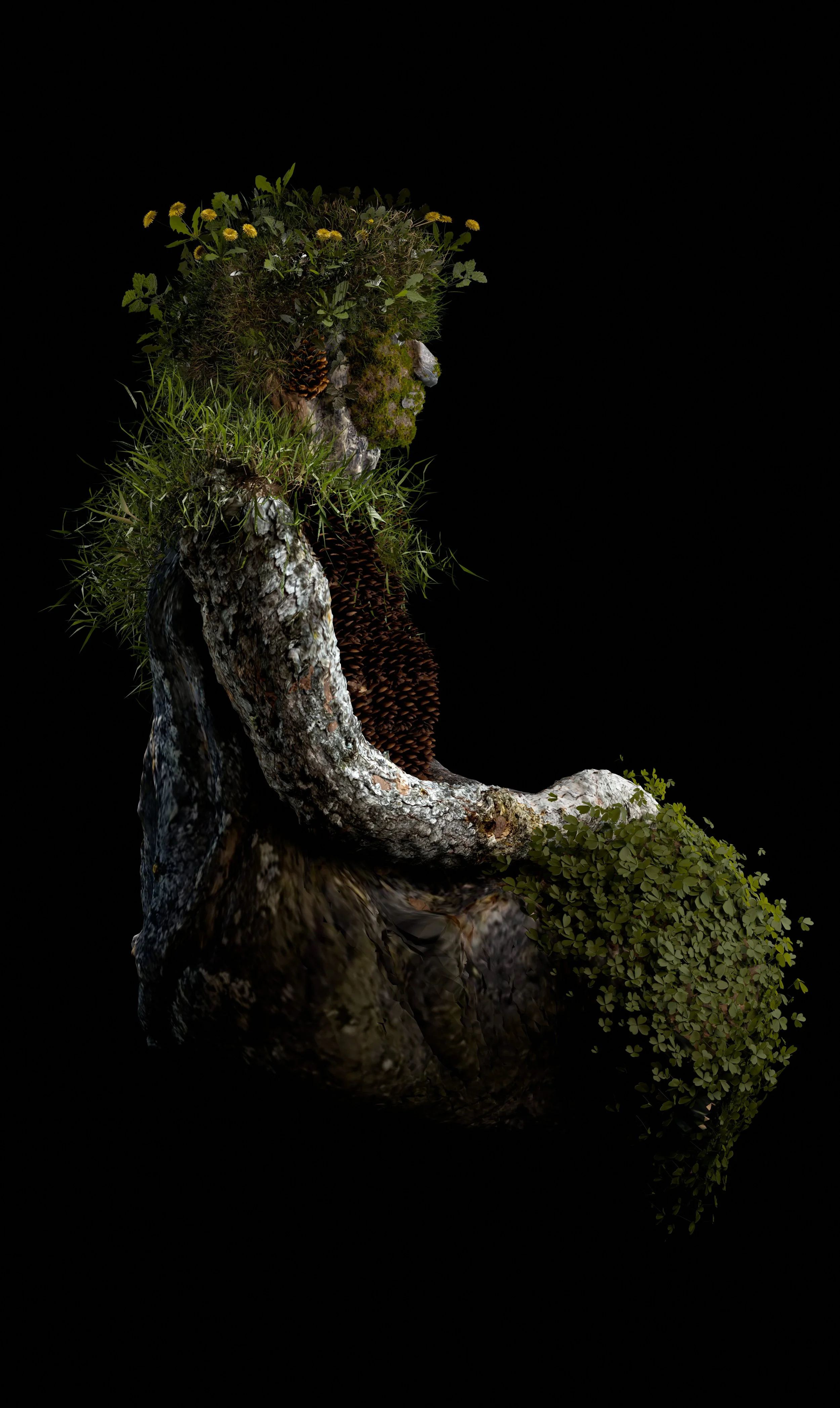
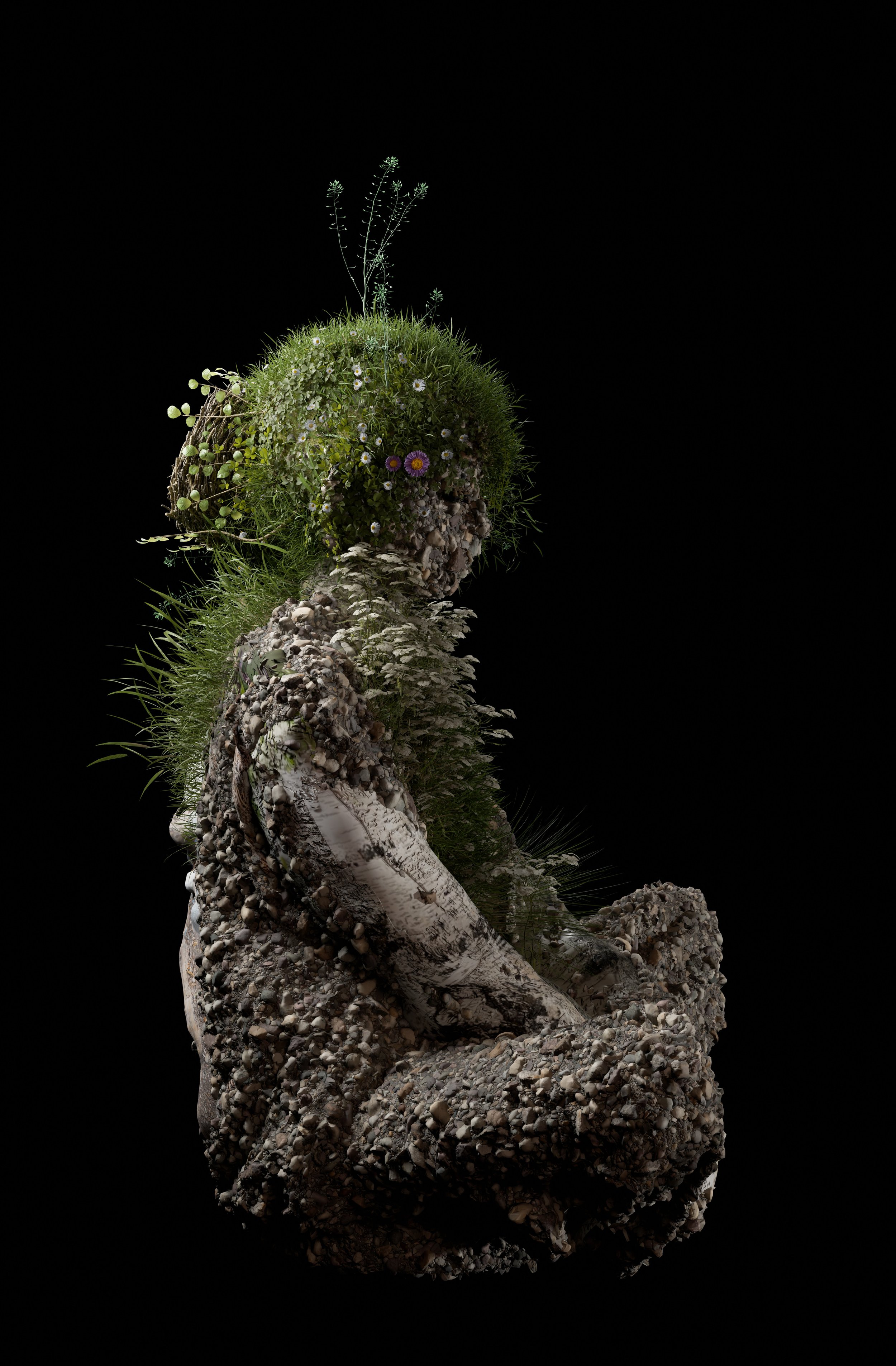
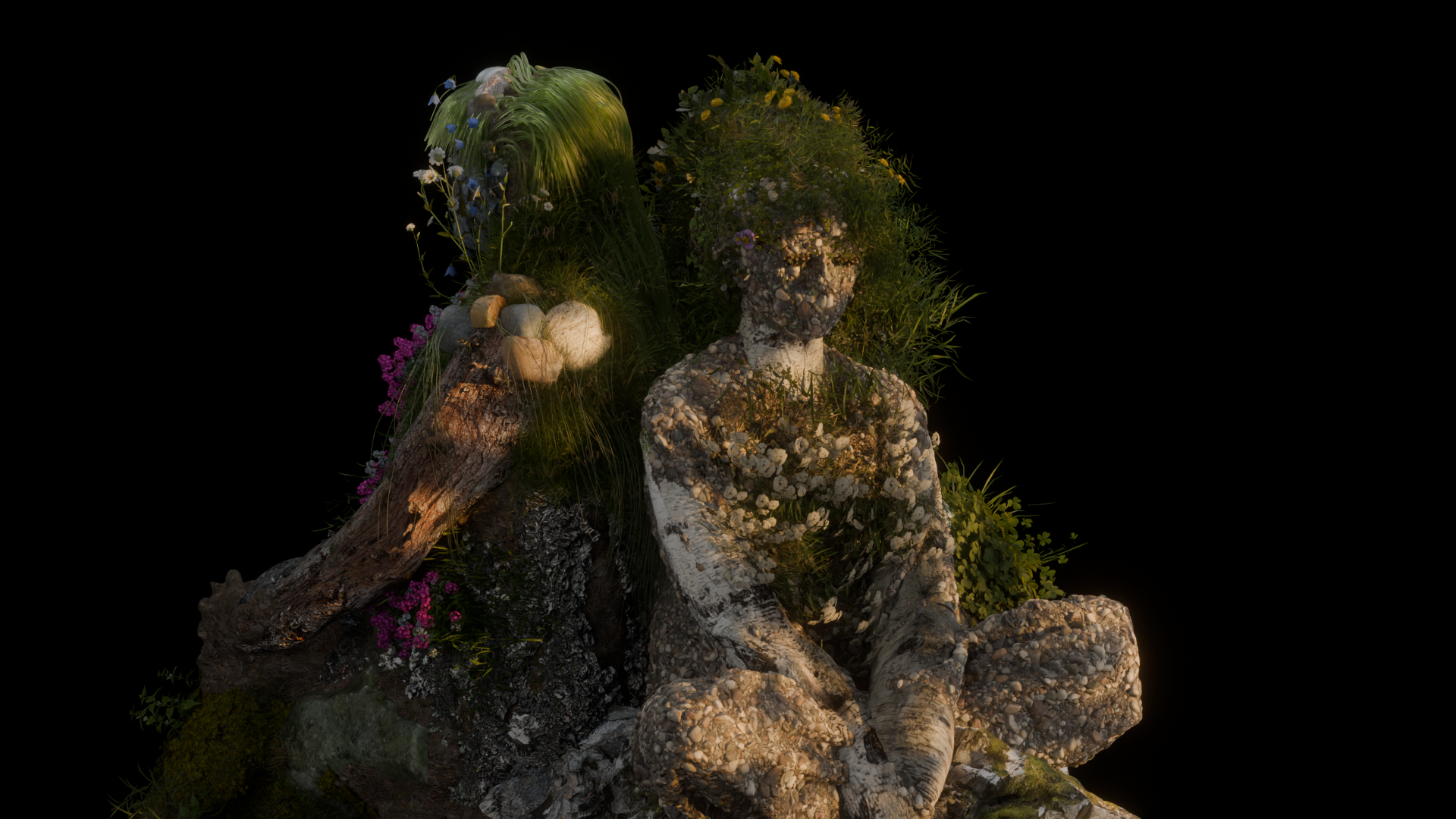
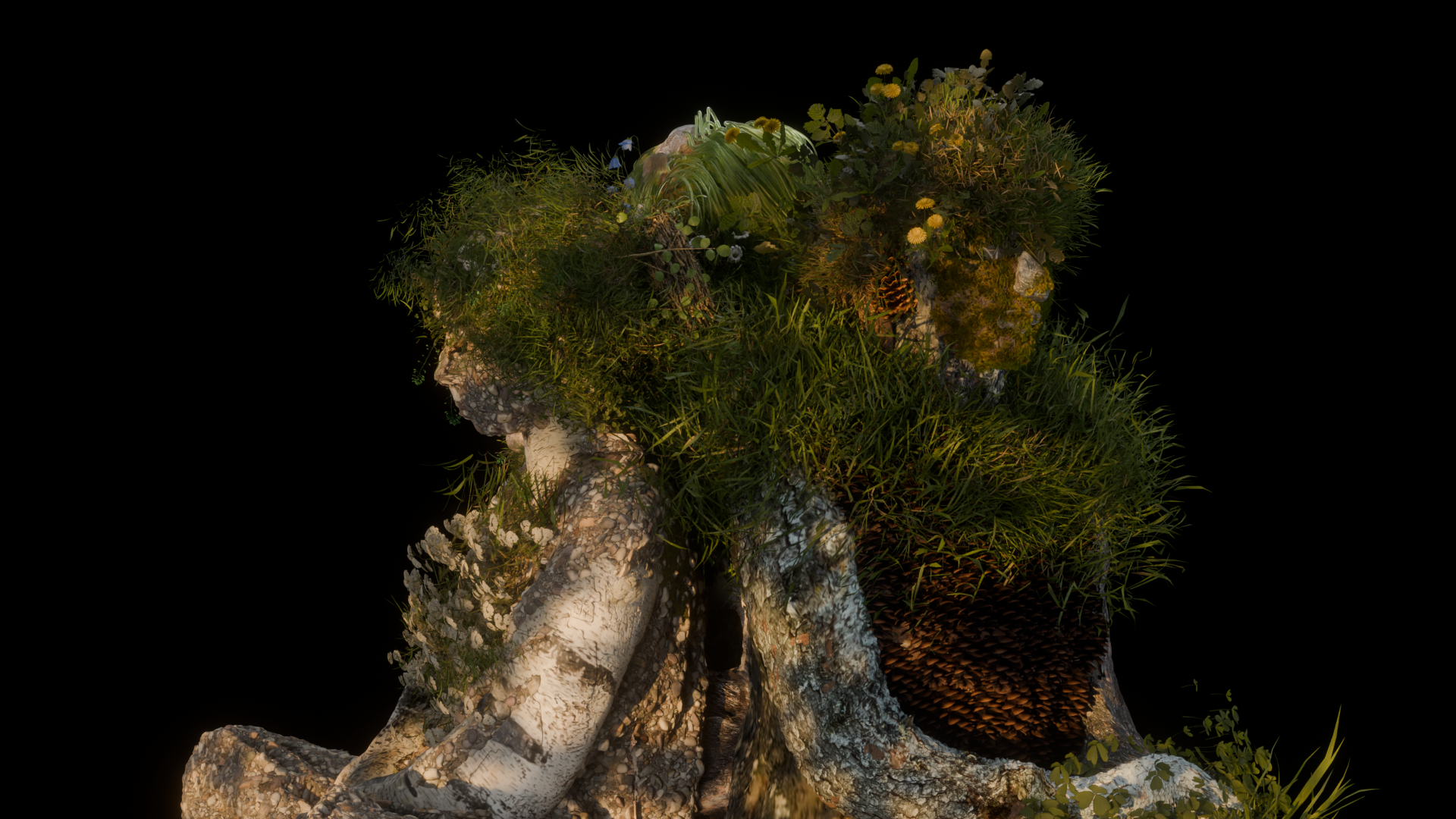
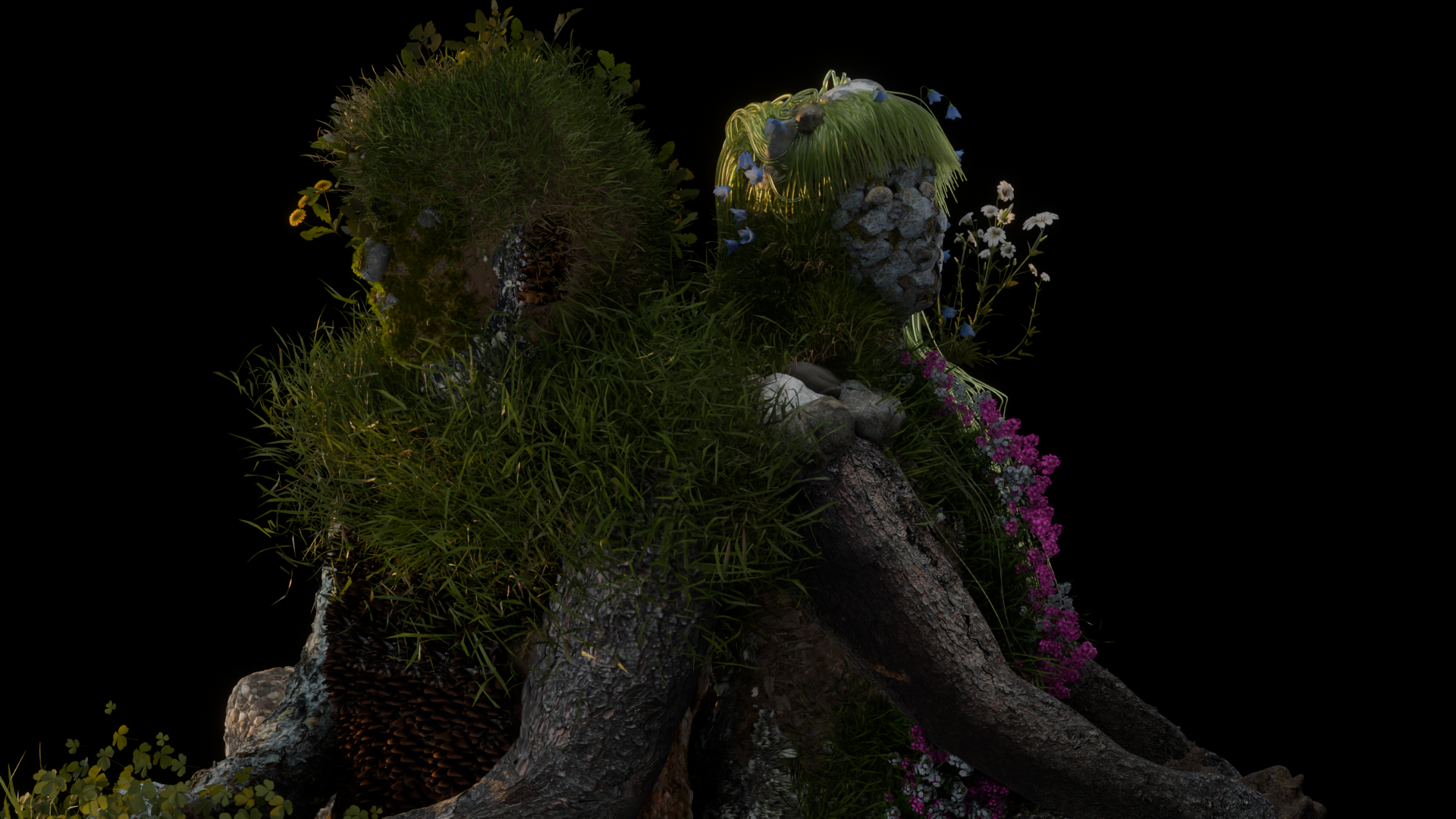
Cambium is a series of 3D animated portraits created by scanning the rocks, roots, soil, moss, and trees that I, Edie, my 15-year-old, and Sierrah Zawacki (filmmaker and research assistant) became familiar with along the Hoodoos Trail near the Banff Centre for Arts and Creativity, where I participated in a six-week residency. Each of us was drawn to certain species or characteristics of the trail. In this, the portraits represent how we perceived and experienced the forest, while contemplating the ancientness of forests and our understanding and perception of time (and our briefness in it). I created these portraits by importing and merging scans of ourselves and the environment in 3D modelling software. This continues my work that began in 2015, in which I merged humans and plant species to contemplate temporal perception, cognizance, plant alterity, and the relational nature of plants and people. These works include Reception, 2015, The Weeping Brook (available through VTape), 2019, and The Perennial Series, 2019.
The Latin noun ‘cambium’ means "a change" or "an exchange”. ‘To think of botanical matter’ as a historical agent […] is to ‘acknowledge that when humans interact with certain plants the relationship is not unidirectional, people too are changed by that association’ (Ghosh, 2024, as cited by Baishya, 2025). In botany, cambium is a layer of cells between the xylem and the phloem that is responsible for the secondary growth of roots and stems.
Archaically, cambium (humoral theory) was classified as one of the three secondary, secondary-alimentary humors (or secondary fluids) that accounts for the formation of tissue. Ancient Greek and Roman physicians and philosophers believed in and practiced Humorism (the humoral theory), a system of medicine that described their understanding of the makeup and workings of the human body. The four main Humors (black bile, yellow bile, phlegm, and blood) were believed to nourish the bodily organs. ‘Humour ' is a translation of the Greek word χυμός, chymos, which means 'juice' or 'sap', metaphorically 'flavour '.